A conversation about teacher-researchers with Gülendam Akgül, Sevda Kır Çelik, and Paul Magnuson
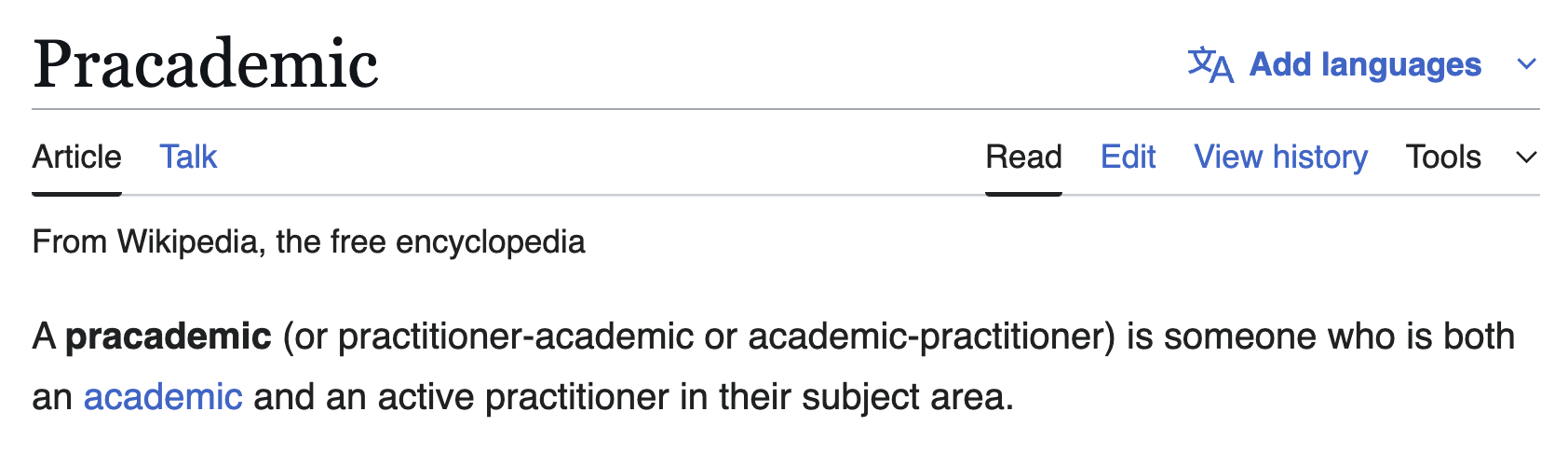
You are going to need a little bit of context here. Gülendam and Paul have traded visiting scholar experiences, first Gülendam at Leysin American School in Switzerland and then Paul at Ankara University in Türkiye. Paul’s role at Leysin American School straddles practice and academia and Sevda has a similar role at her institution, Yenimahalle Arts and Science Center, so Gülendam got us together on a Zoom to talk about the value of this in-between way of being: the value of being a pracademic.
And the last bit of context. Paul consulted this past fall with Eastwood Montreux, a unique boarding school set to open in Fall 2026. The school founders are interested in developing teacher-researchers, it says so right in their materials. A start up fostering pracademics … it sounds right up our alley.
Paul
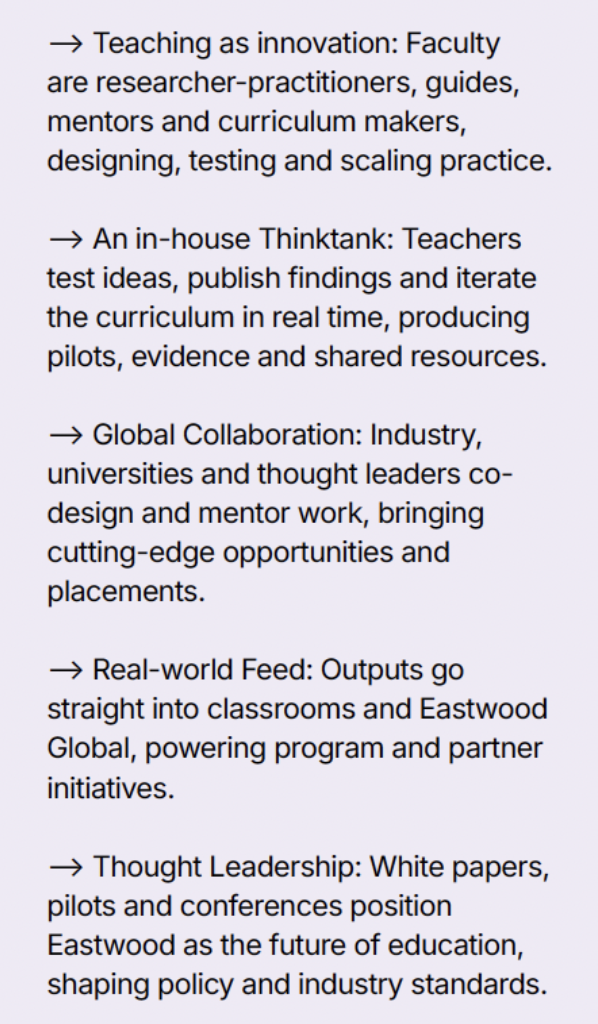
I sent you both a screen shot from the brochure of Eastwood Montreux, the newest school of Eastwood Global. I know advertising is perhaps the most optimistic view of what a program might be like, but I really believe that this organization wants to support teacher-researchers in a big way.
Sevde
I saw it, the school is taking teacher-researchers seriously.
Gϋlendam
And the school is taking a risk because it’s doing something different. I wonder if they’ve tried this in their other schools? Is this new?
Paul
I don’t know. I do think they want to grow the experience further at their new site here in Switzerland, and then inform their other sites through doing so.
Gϋlendam
Well, the world has changed a lot, and is continuing to change faster and faster, but education doesn’t seem to change very much. Just passing on knowledge isn’t the role of school anymore, or at least it shouldn’t be. Perhaps an approach like this will help the teachers adapt more quickly to more modern demands of teachers.
Sevda
When teachers are acting as researchers they can help focus the school’s attention on what is most important, what is most current. Teachers are closest to the learning, they know the students best.
Paul
Right. And the school’s vision, and how it acts on that vision, can evolve with what teachers are learning.
Gϋlendam
Yes, and at the same time teachers can step back and observe themselves. That helps them continue to develop.
Sevda
And that’s how you create a culture of learning in the school. It’s not the teachers telling the students to learn, it’s the teachers learning and modeling that learning with students, for students.
Something else. I think a big issue with action research in schools is that the school administration doesn’t generally allow teachers to do it, or they don’t actively create the time to be able to do it. At least here in Türkiye it is difficult. It must be difficult in many places.
Paul
That’s right. The advantage a teacher will have at Eastwood Montreux is an administration that actively asks them to be teacher-researchers. Being a pracademic is valued, not something that is put up with and not well understood. Oftentimes teacher-researchers are brave souls who feel it is the right thing to do so they just get on with it, even if it’s not well understood. But when they don’t have the support from above, it’s so easy for so many reasons to stop moving forward.
Gϋlendam
Can I say something about the in-house think tank mentioned in the school’s materials? I hope that the teacher-researchers are part of this. That anybody exploring how they teach and how students learn are invited to be in the think tank. They’ll have their own data in their hands, their own ideas and projects in their mind, and they can be an important part of the discussion.
Paul
Just to play the devil’s advocate a bit, wouldn’t all schools say they have an in-house think tank; at least, that teachers are thinking about stuff and talking with each other?
Gϋlendam
Well, informally, perhaps. But a formalized think tank for the purpose of professional development will help teachers wear different lenses to evaluate their experiences. In the teachers’ room, we talk about students and lessons of course. These discussions are mostly about sharing experiences. They are valuable. But the formalization of a think tank will bring new perspectives, the focus can move to trying new ideas and finding ways to make a difference. Teachers will know that the administration values trying things out. And new solutions might come from those trial and errors.
Sevda, do we have think tanks in schools in Türkiye?
Sevda
Only informally, those short discussions in the faculty room, maybe. Teachers might share ideas, but there probably isn’t a structure to it, nor is there support from the administration. The curriculum is really centralized, that doesn’t help.
Paul
But what about instruction? Teachers have flexibility with instruction, don’t they? How do teachers improve?
Sevda
They have to find their own way. It’s something personal and not required by management. Any in-service training is decided by management.
Paul
Cultural context really matters, traditions and practices may not always open the door for teacher-researchers. Maybe it’s important to mention that the parent company, Eastwood Global, has schools in the Middle East, perhaps in some cultural contexts where we wouldn’t expect openness to teacher-researchers. So it’s possible in a variety of cultures and in a variety of education systems.
Sevda
There’s probably a difference between state and private schools, you know.
Gϋlendam
I think being a teacher-researcher is good for teacher wellbeing, When teachers feel respected and free, they are happier. They have more ability and power to get better at what they do.
Sevda
It’s also good modeling, when the teacher is obviously learning. Like when students are expected to know the scientific process, if they know that their teacher uses the process, they might be more motivated. And if teachers use the scientific process, they will get better at helping students learn the process, too. So it’s modeling and training both.
Gϋlendam
Teachers are closest to the student, teachers understand their schools, the opportunities in the schools, and also the constraints. If they are free to make decisions and put their own thinking into practice, it is likely that the school is headed in a direction that is suitable for the students. Without teacher input, or with too much top down influence like Sevda says, school will probably be less relevant for students.
Plus teaching is sort of a routine job. It can get monotonous. But if you work with the mindset that you are constantly experimenting to get better you can get away from the routine and have more variety. You have fresh thoughts, you aren’t just doing the same again and again, you have the opportunity to change yourself so that you are not the same, so you can respond to the changing times and the needs of the students. Teachers need to be able to adapt, otherwise school will remain the same while the world keeps changing.
Paul
It’s not too hard for me to imagine that school leaders could create a culture that says to teachers “we have your back, experiment!” What’s hard to imagine is that administrators actually set aside time for teachers that isn’t filled with teaching classes.
Gülendam
Perhaps schools need to do it like Exeter University, where I was last year. They had time set aside for teaching and research.
Paul
As long as the teaching load is also reduced. You can’t just add more to what teachers are doing – they are already burning out.
Sevda
Could there be special courses for students that are designated as courses teachers innovate with?
Paul
But then are you creating more work?
Sevda
Well, not necessarily, if the course counts as part of their load. It would just signal to students and the teacher that being a pracademic is not only welcome, it is expected.
Gülendam
When I think about my own teaching, I change how I teach every year, even though the content is the same. I don’t need too much additional time to do this, really. If I’m watching what I am doing as the class is going, if I take some notes, in a way I’m preparing for the next class while I’m teaching the current one.
Sevda
And that is exactly what we want teachers to do, as pracademics.
Further blogs about pracademics on The International Educator
Two approaches to research centers at the high school level
Teacher passion projects as professional learning
Example classroom research of a teacher at an international school
My life as a pracademic
Your job is to facilitate peer learning