Tag Archives: nature

A Student Told Me She Hated Nature

“Look deep into nature, and then you will understand everything better.” Rather wise words attributed to Einstein, someone who identified more with humility and curiosity than wisdom. Yet, I thought of this quote recently when a student surprised me by adamantly declaring, “I hate nature!” I could not stop thinking about it. In the moment, cautious of my tone, I recoiled with “Hate nature? But we and all life IS nature!”  I did not go into a diatribe of how we breathe nature. Eat from nature. Live in (and hopefully “with”) nature. There was a reason for her words and I wanted to know more. Her three words made me wonder if our connection to nature might shape our attention. 

As much as I would rather not admit, surely this student is not the only one who does not appreciate nature. Or doesn’t appreciate it YET.  In a time when many scientists call our era the Anthropocene, humans inextricably are reshaping the planet. Nurture, or lack thereof, and nature both are in flux. Systems are being built which remove us from nature, meanwhile not only harnessing our attention but capitalizing on it.

Nature not only restores my attention but my whole being. Sitting in the garden, the mist comfortably falling upon my skin, birdsong filling the air. Relaxing in a myriad of ways and in direct opposition to the algorithmic battles waged for my attention.  As a teacher, the longer I am in the classroom, the more I recognize how the forces competing for attention grow stronger every year. I wonder, might 2026 be the quiet moment before a storm? Moreover, if yesterday was not “the time,” today is. We can no longer wait for a “tomorrow,” The choices we make are hopefully as conscious as they are powerful. Choices that lead to habits. Habits formed to help guide attention. I wake up thinking, with utmost intentionality, of the importance to influence the next generation (even the “nature haters”) to remember nature. Not something outside of us. Nature is what we are.

A decade can pass rather quickly. It is hard to comprehend how it was 2016, and the octogenarian and world-renowned biologist, E.O Wilson, was sitting in the row in front of me. He was about to speak at the International Union for Conservation of Nature (IUCN) World Conservation Congress. I didn’t even know who he was. My mom would say moments like these could lead others to believe I possibly was born under a rock. Nonetheless, Wilson made an impression. Speaking about his “Half-Earth Proposal,” Wilson advocated for conserving half of the Earth’s land and sea to prevent mass extinction. This aligned with his integrity, what he knew to be true and with who Wilson was. Akin to Dr. Seuss’s Lorax, Wilson had been “speaking for the trees” for years. In effect, 18 years prior he said, “We are drowning in information, while starving for wisdom.” Mind you, this was nine years before the iPhone! Our pockets free of “smart”phones and yet we already were “drowning” in information.More digitally connected but rapidly removing ourselves from what truly connects us. 

Attention Is the New Currency

The modern attention economy pervasively captures students through algorithms and constant distraction. I say “students” but none of us really is immune to the design. “When you combine this business model with powerful handheld devices that are always connected to the internet, algorithms being weaponized to extract as much of our time and attention as possible, and hundreds of billions of dollars of investment, suddenly the societal impacts become worrisome.” Author Cal Newport shared this ten years ago in Deep Work. Social Media platforms like TikTok, Instagram, and YouTube are designed to not only capture our attention but to hold it. Essentially, more time spent on a platform, the more money made. If you think your dopamine reward system is not being tapped into, grab a post it note and just tally how many times you check your phone throughout the day. A Washington Post article titled, Why constantly checking your phone can drain your focus and memory,” cites how  66% of Americans use their phone within 10 minutes of waking up. Further, the article has exceptional graphics to show the data, facts that are contrary to common underestimations of how often one checks their phone. Later in the article, the following is shared, ”German researchers from Heidelberg University found that after just 72 hours without smartphone use, brain activity began to mirror patterns typically seen in substance withdrawal.“ 

Authors Johann Hari and Jonathan Haidt have significantly impacted my thinking. Both also have me reconsidering my own tech use. Hari’s bend is how our attention is not “lost,” but rather “stolen.” Whereas Haidt argues that we delay putting phones in children’s hands due to the detrimental impacts as a result phone-based childhood instead of play-based. In the Anxious Generation, Haidt’s correlational data can be a bit of a deep dive. Yet, there certainly is something to say about the undeniable synchronicity of increased screen time and the uptick in anxiety and depression of girls, but also what Haidt calls, “the retreat from the real world among boys.” Hari and Haidt in many ways are screaming from the mountain tops. But are we listening? 

Some are.

In fact, over 30 states now have policies governing cell phone use in schools. Several counties also have nationwide bans of cell phones in schools. These policies certainly can and do help. And yet sometimes, it feels like just a drop in the ocean.

Maybe It Begins With a Seed

The question becomes, if attention is being captured everywhere else, where can students learn to focus again? I caught up with the student who shared, “I hate nature.” It took some probing but I came to find out that her definition of nature is simply, “bugs.” A teen from the world’s largest metropolitan area, her experience outside the city is limited. She certainly is not alone. A growing body of research shows that when children lose regular contact with nature, there tends to be a decline in well-being. Further, creativity and their attention also are negatively impacted. One of my favorite studies by researcher Ming Kuo found how students with classroom views of green landscapes showed better concentration and academic performance. Just looking at nature, passive exposure to greenery, can measurably improve one’s attention. Exposure to nature may not immediately create a love for the outdoors. But it may quietly help restore attention.

Our school, here in Hawaii, set against a backdrop of green rolling pastures and clear blue skies possibly is not eliciting a love of nature for my student. But, maybe it is serving her ability to pay closer attention and we don’t even know it! Still, work needs to be done in redefining nature. And this begins with experience. Planned for the fourth quarter is a unit where we spend time in our school’s garden. I already saw the student’s downturned smile when I mentioned how we would be growing plants from seed. Something no student in my high school class has yet to do. I still remember planting seeds in Dixie cups: carefully watering and moving them in the sun and shade throughout the day. When I was in my early twenties I visited my childhood home and was struck to see how the redbud sapling I was given in 1st grade as a part of National Arbor Day had grown to 30 feet. Fast growing, redbud trees often grow up to two feet a year. The intent of our growing plants and being in the garden, is primarily about exposure. It also provides for the opportunity to focus and be away from screens. 

I can’t help but think about how these experiences might be seeds themselves. And what if…What if attention grows the same way a tree does? 

Two feet a year?

##########################

GLOBAL BOOK RECOMMENDATIONS

Today I would like to share great books about nature: trees, animals, water and also a book for children on taking action for causes like animal rights.

When Nature Calls: The Unusual Bathroom Habits of the World's Creatures

When Nature Calls is a nonfiction picture book about the ‘Unusual Bathroom Habits of the World’s Creatures’, written by Maria Birmingham and illustrated by Dave Whamond. The illustrations are hilarious while the facts are fascinating, as well as nice and gross for kids. Did you know that some critters use their poop as shields to ward off enemies? And which is the only animal in the world to make square poops? A sloth only goes once a week while a housefly poops hundreds of times a day. This book is full of interesting facts that help us realize that poop is helpful, even necessary, to the planet. ISBN 978-0889957244, Red Deer Press

Mother Aspen: A Story of How Forests Cooperate and Communicate

Mother Aspen, A Story of How Forests Cooperate and Communicate, written by Annette LeBox and illustrated by Crystal Smith, is based on the popular research by Suzanne Simard in her book Finding The Mother Tree. This beautiful picture book for young nature lovers shows an aspen tree through her lifetime and her relationships with saplings. Not only does the story show a tree’s interaction with other species, it also tells how a mother tree supports other trees around her by sending nutrients nad messages. And as the tree grows old, a new tree takes over the important role of nurturing the forest. ISBN 978-1-77306-935-7, Groundwood Books

Water Day

Water Day by Margarita Engle, with art by Olivia Sua, is the story of how important water is to people who don’t have easy access. In a young girl’s town in Cuba, water days are a highlight. It is when the water truck comes and supplies people with just enough clean water that they will need for a week – to cook, to clean, to drink. The girl’s grandmother recalls how rain used to come but how things have changed. This gentle story sheds light on both the importance of water and on global warming, by sharing a specific event in Cuba – a picturebook that can open doors for many valuable classroom discussions.  ISBN 978-1-6659-1871-8, Atheneum Books for Young Readers

A Strange Place to Call Home: The World's Most Dangerous Habitats & the Animals That Call Them Home

A Strange Place to Call Home, the world’s most dangerous habitats & the animals that call them home – is not a new book but it’s so gorgeous that I do want to share it with you. Written by Marilyn Singer with art by Ed Young, this book will appeal to kids as well as adults. It features unusual creatures that dwell in unusual, often harsh habitats. Have you ever heard of petroleum flies? In this pages you will meet monkeys who live in snow, penguins who live in warm places and fishes that walk. Each animals is described in a skillfully crafted poem. The back of the book explains not only the animals and their habitats but also the various forms of poetry used. A must read for classroom everywhere. ISBN 978-1-4521-0120-0, Chronicle Kids

Tizzy and Me: Fifteen Ways to Love a Mink

Tizzy & Me: Fifteen Ways to Love a Mink, is written by N.M.L. Hazard and illustrated by Alice Priestley. This is a chapter book in a new series aimed at independent readers aged 7-9. It’s an engaging read that shows us Georgia and her best friend Winona. Georgia is very excitable and readers will relate to her problems and interests. She cares deeply about animals and is thrilled when her teacher helps her to set up a club for animal lovers at school. They take action by writing letters and making posters. This book is entertaining but it does more than that: it shows kids that it’s OK to care, how they can learn more about their interestes and how to make a difference. Highly recommended for elementary classrooms and libraries. ISBN 978-088995-7503, Red Deer Press

Margriet Ruurs is the author of many books for children. She conducts author presentations at international schools. To book contact her at: www.margrietruurs.com

GLOBAL BOOK RECOMMENDATIONS

Wildlife in the city… From trees turning colour, to growing gardens and zoos, there is much of nature to be found in cities. These books celebrate the magic of growing your own vegetables, watching nature in an urban environment and, as a bonus, the magic of reading!

Bunny Loves Beans by Jane Whittingham is a picture book for the very young that works on many different levels. Not only do the text and the lovely photos introduce a wide variety of animals, it also focuses on healthy, natural foods as well as colours. A fun book to read aloud and share many times over. Follow it up with healthy snacks mentioned in the book: blackberries, carrots, bananas and more. ISBN 978-1-77278-301-8, Pajama Press

City Beet by Tziporah Cohen, illustrated by Udayana Lugo, is a fun, repetitive picture book to read aloud. Using the same rhythm as books like The House That Jack Built and the fun of The Gigantic Turnip, this is sure to become a favourite. Victoria lives in the city. While out for a walk with Mrs. Kosta, they spot a poster for an upcoming city block potluck. “Raw beet salad!” exclaims Victoria and, together, they buy seeds at the corner store. Together they dig, they water and fertilize. And the beet grows. It grows and grows, right until the day of the potluck. But when they want to harvest it, the beet won’t budge, no matter how hard they pull.  Soon help arrives. First a taxi driver, then policemen, a street sweeper. More and more people arrive. They all tell Victoria that she doesn’t need to help so she prepares her recipe. But even with an endless row of people pulling, that beet won’t budge. Until, finally, Victoria comes to the rescue.  And her raw beet salad is ready just in time for the block party. This fun, colourful story comes complete with the recipe. ISBN 9781534112711, Sleeping Bear Press

The Yellow Leaves Are Coming by James Gladstone, with art by François Thisdale, is a reaffirmation of the turning of seasons. Two children watch the last yellow leaf flutter to the ground. Then they know that the snow will come, followed by slush. After the hot days of summer, the school year starts again and leaves turn colour. They find solace in the cycle of seasons and knowing that yellow leaves are here once again.  ISBN 978-0889956834, Red Deer Press

Wild About Books by Judy Sierra, illustrated by Marc Brown is not a new book. But what a wonderful title to use if you are discussing libraries, and especially mobile libraries. Miss Molly McGrew drives her bookmobile into the zoo by mistake. Through great rhythm and rhyme, this is a wild romp of animals discovering the joy of reading. Both the text and the art are full of subtle nuances that make this picture book fun for readers of all ages. From ‘raccoons who read in bunches to llamas who eat while eating their llunches’, ‘hyenas howling over joke books to porcupines writing with their very own quills’ this book is a fabulous read aloud for Poetry Week or parent nights at school.  ISBN 978-0-375-82538-5, Alfred A. Knopf/Penguin Random House

Wildful by Kengo Kurimoto is a 212 page graphic novel. At first, when Poppy walks her dog Pepper along the city streets, she notices nothing of the world around her because her eyes are glued to her cell phone. But then Pepper chase an animal. He jumps through an opening in a fence and disappears into a dark clump of trees. Cautiously Poppy follows. She calls and searches but Pepper does not come back. Around her, Poppy hears unusual sounds. The woods frighten her. But then she meets Rob who explores the forest. He points out birds and tracks. Slowly, she starts to notice all that goes on the wild woods. Leaving first her phone, and then her headset, she becomes more aware and intrigued by nature. Eventually she even convinces her mom to come along and they spend time reconnecting. With nature but also with themselves. A great book, for readers of all ages, that can lead to endless classroom activities. ISBN 978-1-77306-862-6, Groundwood Books

Margriet Ruurs is now taking bookings for author presentations in 2025. “Best author visit in 30 years!” – quote from Kelowna BC teacher.

www.margrietruurs.com

Earth Day Books

Earth Day was celebrated recently around the globe. What better way to celebrate than with books that create a lasting impression and support readers of all ages.

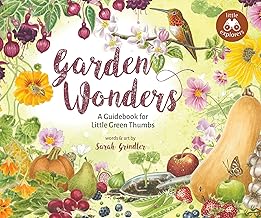
Garden Wonders: A Guidebook for Little Green Thumbs

For young students and budding gardeners, here’s a perfect picture book to celebrate the abundance of gardens. Garden Wonders, A Guidebook for Little Green Thumbs by Sarah Grindler shows how plants grow, what is needed to help plants to flourish, how you can feed the soil with compost, what plants do for nature and much more. The book has activities and is perfect to use if you have a school garden. It even comes with a package of wildflower seeds! This title complements the Little Explorers series which includes Seaside Treasures and Forest Magic. ISBN 978-1-77471-143-9, Nimbus Publishing

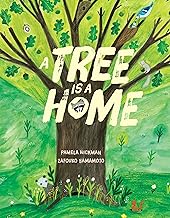
A Tree Is a Home
One Well: The Story of Water on Earth

Books I reviewed previously but perfect to use for Earth Day, include A Tree is a Home by Pamela Hickman and Zafouko Yamamoto is a beautiful picturebook to share with young readers when looking at the importance of all things tree-related (Kids Can Press). One Well, the Story of Water on Earth by Rochelle Strauss focuses on the water on earth in all of its forms and how it effects all life (ISBN 1525302361, Kids Can Press).

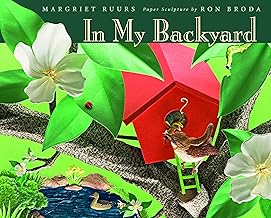
In My Backyard

I wrote a book called In My Backyard (Tundra Books) which shows common critters that live in urban backyards. The art includes hidden animals and a ladybug to spot on each page.  ISBN 978-0887767753, Tundra Books

Tying into Earth Day and climate change are these two nonfiction picture books:

50 Climate Questions: A Blizzard of Blistering Facts

50 Climate Questions by Peter Christie and Ross Kinnard is an appealing book chock ful of fun illustrations and jokes but also dead-serious facts about the environment and the effect humans are having on it, as well as what we can change to improve. This is not a new title but, unfortunately, every bit as relevant today. ISBN 978-1-55451-374-1, Annick Press

Trash Talk: Moving Toward a Zero-Waste World

Trash Talk by Michelle Mulder is a great title in Orca’s Footprint series. The subtitle is Moving Toward a Zero-Waste World. This book, too, hones in on the amount of packaging we use and how we can change that, thereby reducing our waste. Besides facts and suggestions the book offers many real examples of kids and groups working towards a better world. ISBN 978-1-4598-0692-4, Orca Book Publishers

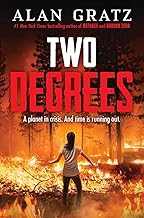
Two Degrees

Two Degrees by Alan Gratz. I was already a fan of Alan Gratz’ s powerful writing, especially in Ban That Book, a realistic fiction story about a school library and censorship. 

Two Degrees is a riveting read for both kids and adults. It brings home the message about climate change and global warming in an even more urgent way than any nonfiction book I have read.  

In his book Refugees, Gratz used tales of seemingly unconnected people, bringing them together in a skillful way at the end. He does the same admirable job in Two Degrees, showing that all places and people are ultimately connected. 

Using three different settings across North America, Gratz spins a realistic tale of what is happening to our planet right now, right here. Two boys in the Arctic face danger as polar bears are effected by think ice. A girl in Miami is caught up in the hurricane of the century while Akira in California needs to outrun a wildfire that is set on destroying her home and her life.

A fantastic read for anyone which brings home the urgent need for all of us to change our ways now. As Alan Gratz states in the very end of this book: “If the bad news is that humans are causing the climate crisis we face now, the good news is, we have the power to fix it. It’s your world, your future. It’s up to you to decide what you want that future to look like, and what you can do to make it happen.”  ISBN 978-1338735673, Scholastic

Margriet Ruurs is a Canadian author of over 40 books for children. She conducts author visits to International Schools anywhere.

http://www.margrietruurs.com

Spring Into Books

These books not only are appropriate to the season, they shine a light on different aspects of Spring.

A Flower Is A Friend by Frieda Wishinsky, art by Karen Patkau is a lovely celebration of flowers. Flowers help many friends, like bees and butterflies. They dance in the wind and can shelter insects. The lyrical text lends itself to be read aloud with young readers. The art invites the reader to study the images closely to discover more animals. The back pages give nonfiction details about each animal mentioned like bats and spiders. A perfect book for nature lovers. ISBN 978-1-77278-280-6, Pajama Press

Afikomen by Tziporah Cohen and Yaara Eshet tells the story of the origin of a Jewish tradition: the breaking of matzah at Passover. This wordless picture book shows a family celebrating together while the children sneak under the tablecloth. When they emerge they have time traveled to Egypt where they meet Moses in his wicker basket and help him to safety in the Pharaoh’s daughter’s arms. The back page gives details in this biblical tale.  ISBN 978-1-77306-606-6, Groundwood Books

The Best Eid Ever by Asma Mobin-Uddin, illustrated by Laura Jacobson. This picture book explains the biggest holiday in the Muslim year when Aneesa gets to wear new clothes, helps cook lamb stew and goes to the mosque. A lovely story to share for those kids who will recognize themselves and for those who will learn something new about a major traditional celebration. ISBN 978-1-59078-431-0, Boyds Mills Press

Ramadan, The Holy Month of Fasting by Ausma Zehanat Khan. Many of us are familiar with Ramadan. But what does it mean, why do Muslims fast during the month of Ramadan and how is it celebrated in countries around the world? This beautiful nonfiction book answers those questions and much more. There are information boxes, recipes of traditional dishes, photos and lots of information to learn about Ramadan. ISBN 978-1-4598-1181-2, Orca Book Publishers

Passover, Festival of Freedom by Monique Polak. This nonfiction book explains the origins and traditions of Passover. Through text, facts, photos and personal accounts, the book shares stories and information from the Jewish community. Recipes for traditional Passover dishes are also included in this beautiful information book. Informative for those familiar with Passover and also for those who are not. ISBN 978-1-4598-0990-1, Orca Book Publishers

Margriet Ruurs is a Canadian author of many books for children. She is available for author presentations at International Schools: http://www.margrietruurs.com

GLOBAL BOOK REVIEWS

Picture Books About Science

Here are some fabulous new, and not so new, titles to use as tools in the classroom with students while studying science. 

When Elephants Listen With Their Feet by Emmanuelle Grundmann is a brand new title that looks at animals’ senses. A 40 page picture book, it has attractive art and lots of text boxes to encourage curious, budding biologists. From fish that pass gas to communicate to the taste buds of pigs and everything in between, this book is full of fascinating facts about senses. ISBN 978-1-77278-123-6

It’s About Time, Pascale Estellon.From one second to one century, this book teaches young children about time. Combining information with activities, it touches on clocks, how to tell time, on calendars and seasons. 

ISBN 978-1-77147-006-3

Putting a whole different slant on telling time is the new release Once Upon An Hour byAnn Yu-Kyung Choi and Soyeon Kim. This bedtime picture book is based on the tradtional Korean practise of timekeeping with the 12 animals of the zodiac assigned to a section each of the 24 hour clock. 

ISBN 978-4598-2127-9

50 Climate Questions, Peter Christie, with fun art by Ross Kinnaird, poses an, often funny, question on each page with the answer chockful of information from ice ages to today, including temperatures, weather, greenhouse gasses and global warming. Besides questions, the book also has answers on how we can change our ways.

ISBN 978-1-55451-374-1

In a similar vein, but for older readers, Paul Fleischmann looks – in his book Eyes Wide Open – at the politics and psychology behind environmental headlines. Besides opening eyes to issues such as reducing carbon emissions, the book brings awareness of differences in media coverage of the issues. Great for (highschool) classroom discussions.

ISBN 978-0-7636-7545-5

Design Like Nature, Kim Woolcock and Megan Clendenan is another brand new, fabulous title in the important Orca Footprints series. Its subtitle is ‘Biomimicry for a Healthy Planet’. This book explains that humans design buildings and cities that change the environment. But what if we designed like nature, learning to design stronger, better, brighter and more sustainable by using nature’s examples? From solar power to natural dyes, from bullet trains to medicine this book looks at reducing our footprint and making the impossible, possible by learning from nature.

ISBN 978-1-4598-2464-5

For budding marine scientists, the book Orcas Everywhere by Mark Leiren-Young is a valuable resource. Exploring the ‘Mystery and History of Killer Whales’ this book has great photos and facts on all aspects of orcas: a look at aquariums, hunting skills, communication as well as what we can do to protect these valuable mammals of the sea.

ISBN 978-1-4598-1998-6