Curriculum designers often talk about “designing for success.” But if we are serious about deep learning, we also need to design for failure, not the crushing, high-stakes kind that shuts learners down, but the productive kind that builds understanding, skill, and confidence over time.
Because the truth is that in real-life learning, the first attempt is rarely the best. And when we design curricula as if students should “get it right” immediately, we teach students that not knowing is unsafe.
Designing for failure is designing for trying: curiosity over compliance, iteration over perfection, process over product, and reflection over performance.
Why learning through trying and failing works?
A strong body of learning science shows that struggle when it is structured and followed by good feedback can lead to better conceptual understanding than challenge-free learning that feels easy in the moment.
Productive failure consolidates learning
I read about Manu Kapur’s research on Productive Failure that demonstrates when learners first attempt complex problems (often unsuccessfully) and then receive targeted feedback, they can outperform learners who receive direct feedback first. This is because the initial struggle helps them notice gaps, generate ideas, and build metacognition.
This is not failure for failure’s sake. It’s a deliberate sequence:
- attempt
- fail safely
- surface misconceptions
- receive feedback
- consolidate learning.
Psychological safety for risk-taking
In Amy Edmondson’s research on psychological safety, it is discussed that people learn more in environments where it feels safe to take interpersonal risks, like asking questions, admitting confusion, and sharing imperfect ideas. When learners fear embarrassment or punishment, they avoid exactly the behaviors that lead to growth.
In other words, we must design the conditions for risk-taking.
Growth mindset as a design principle
The growth mindset literature has evolved, and researchers have been clear that mindset work must be paired with supportive contexts and credible learning experiences (not just teachers and parents saying “Try harder”.
So the curriculum and pedagogy both must prove to learners that improvement is possible through cycles of feedback, revision, and visible progress.
How failure creates improvement
Failure becomes powerful when it triggers reflection, that is:
- specific (“What exactly didn’t work?”)
- strategic (“What will I change next time?”)
- evidence-based (“What feedback or data supports that change?”)
This turns “I failed” into:
- “My approach didn’t work.”
- “My strategy needs adjusting.”
- “My skill needs to develop”
Reflection is when learners convert experience into learning.
Skills students learn when they try
When curriculum makes space for intelligent struggle, students practice skills that transfer far beyond school:
- Metacognition: noticing what they know, what they don’t, and why
- Strategy selection: choosing methods, and pivoting when needed
- Resilience: recovering from setbacks without avoiding future attempts
- Feedback literacy: seeking feedback, interpreting it, applying it
- Iteration: improving through drafts, prototypes, and refinements
- Creative risk-taking: generating multiple possibilities instead of “the one right answer”
- Collaboration under uncertainty: thinking aloud, disagreeing respectfully, building on others’ ideas
- Error and bias analysis: identifying misconceptions and turning them into learning targets
A curriculum that avoids failure accidentally teaches the opposite skills: caution, perfectionism, dependence, and fear-driven compliance. Hence, learners fear experimenting and creative thinking.
What it means to design a curriculum for failure
Designing for failure is not lowering standards. It’s designing the pathway to high standards.
1) Replace one-shot tasks with iterative tasks
If the grade is final after one attempt, students will protect themselves by playing it safe.
Instead, implement design thinking into tasks: draft 1 – feedback – draft 2 – reflection – final; prototype – test – revise – retest; plan – execute – debrief – adjust.
Design principle: Assessment should reward improvement, not just performance.
2) Use low-stakes practice before high-stakes performance
A high-stakes environment creates performance anxiety and avoidance.
Build a ladder:low-stakes quizzes: practice presentations: short skill sprints: “failure-friendly” practice tasks. Hence design for multiple formative tasks. Then move to summative assessments once learners have had time to build competence.
3) Build productive struggle into learning sequences
Use the Productive Failure pattern intentionally:
- Give a rich problem first (ill-structured, interesting, multiple solution paths)
- Let students attempt in groups
- Capture different approaches and misconceptions
- Then teach showing why certain methods work better
This aligns with what Productive Failure research suggests about sequencing struggle before instruction.
4) Make error analysis a routine, not a punishment
Teach students to ask:
- What was my hypothesis/plan?
- What happened?
- What does this tell me?
- What will I change next time?
Make it normal to submit an error analysis alongside solutions, especially in math, sciences, coding, design, and writing.
5) Design classroom culture as part of the curriculum
Curriculum is not just content; it’s the norms within a learning environment that shape learning behavior. If psychological safety predicts learning behaviors, then culture is a curriculum outcome not an optional extra. Some practical classroom strategies can be designed to:
- celebrate revisions and improvements publicly (not just top scores)
- model teacher mistakes and how you recover
- use asset-based language for failure like “not yet,” “next iteration,” “what did we learn?”
- assess and reward collaboration and risk-taking behaviors through reflections
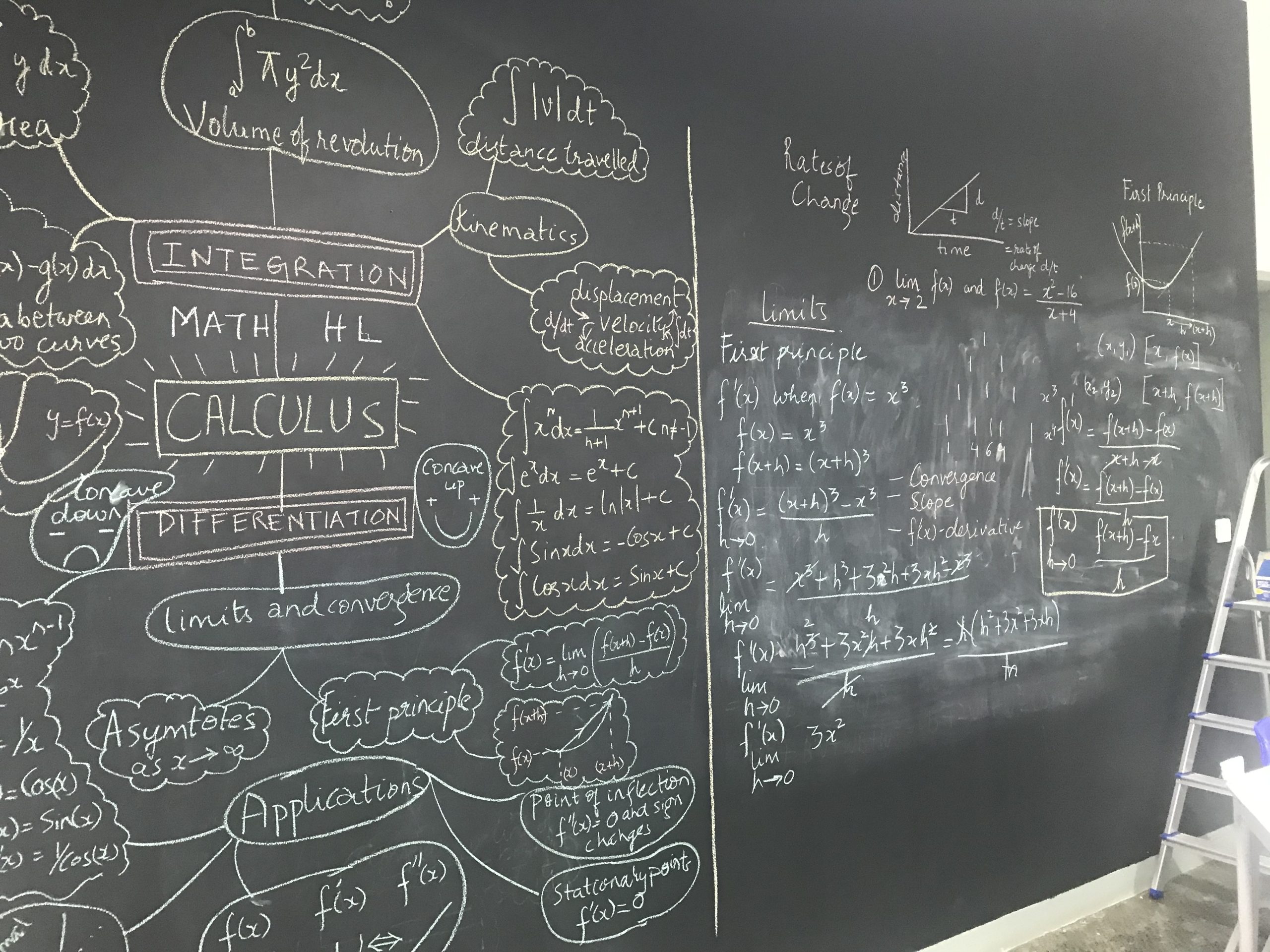
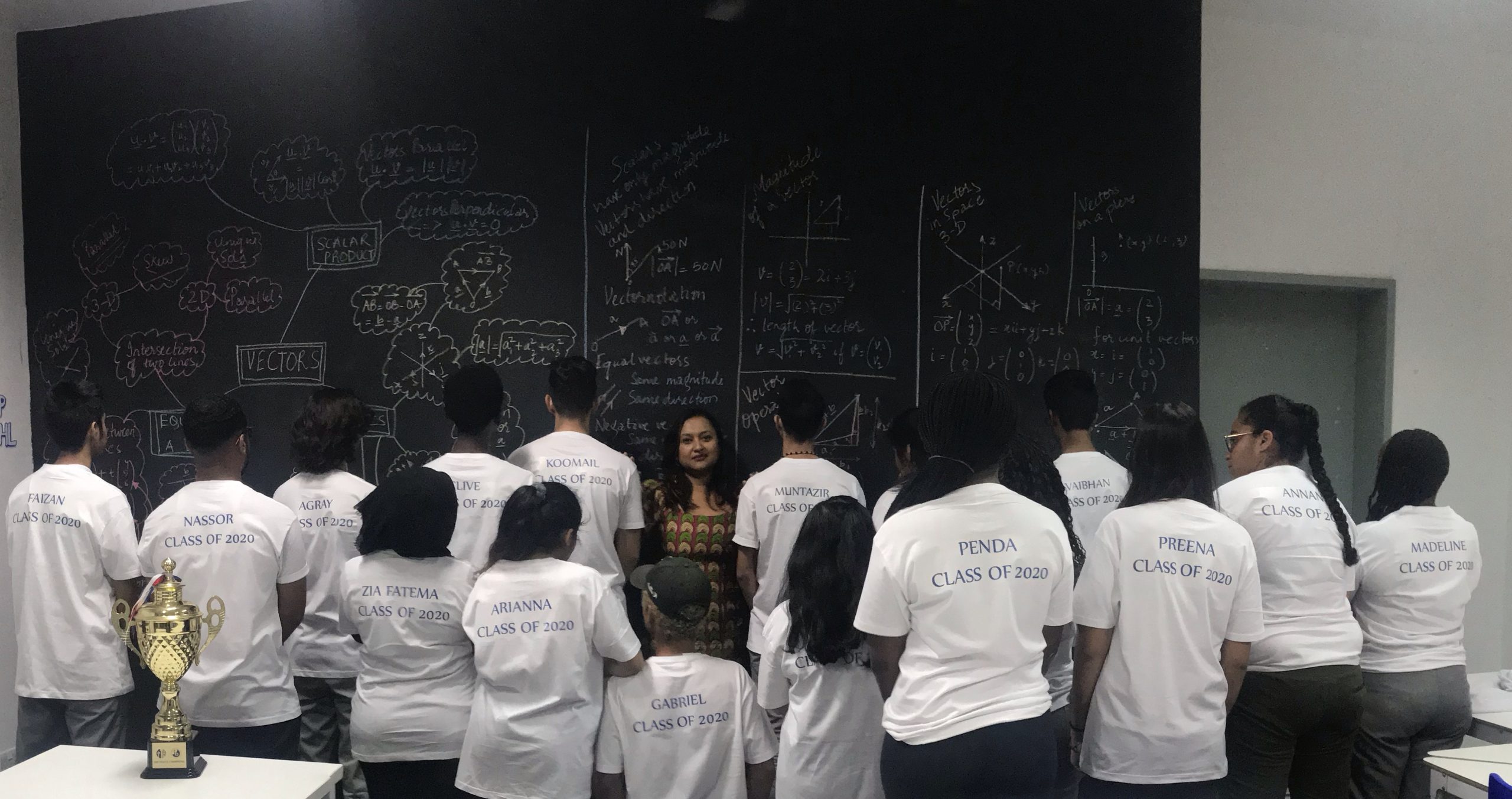
Here are a few images from my math classroom where I painted an entire wall as a blackboard, allowing students to collaborate and solve problems. Making mistakes and erasing them over and over again till they get the solution.
Real-life examples of failure as a pathway to excellence
Stories matter because they give learners a new identity: not “I am bad at this,” but “I am making progress.” Some examples:
James Dyson had thousands of failed prototypes
In my business management classes I use the case study of James Dyson who is widely associated with perseverance through iteration. Dyson’s own profile notes thousands of failed vacuum prototypes before success. That’s not talent or expertise; this is simply design thinking, testing, and refining.
The curriculum connection can be prototype-based learning, engineering design cycles, learning through testing and refinement.
J.K. Rowling saw rejection as part of the journey
Being a big Harry Potter fan, I read about Rowling’s rejections, and her early manuscript was sent to multiple publishers before acceptance. Her dark phase in life that allowed her to reflect on her experiences to produce a timeless masterpiece. Again learning from failure.
The curriculum connection can be writing workshops, revision cycles, persistence through critique, building tasks over time.
Thomas Edison reframed failure as data
Edison is famously quoted for reframing failure as discovery, finding ways that don’t work as part of the process. He showed us experimentation is iterative in nature.
The curriculum connection can be creating labs as inquiry, hypothesis testing, documenting iterations, treating “wrong” results as data and information.
A. P. J. Abdul Kalam learnt best from public failure
My personal favourite is the story of former Indian president Dr. A. P. J. Abdul Kalam. Especially as I met him when my father was providing military and medical cover at the satellite launch base. His journey is a great example of how failure shaped his learning. Early in his career at ISRO, Kalam was the Project Director of the SLV-3, India’s first Satellite Launch Vehicle. In 1979, the launch failed. The mission did not place the satellite into orbit, and the failure was public, technical, and deeply disappointing.
What happened next is where the learning lies. Kalam has written that the failure forced him and his team to analyse every design assumption, revisit calculations and control systems, reflect on leadership and communication under pressure, and rebuild trust within the team. Kalam learnt from the failure. The following year, in 1980, the SLV-3 successfully placed the Rohini satellite into orbit, marking India’s entry into space capability.
The fear of failure is a design problem
When students avoid trying, it is not because they lack potential rather because the environment has taught them that mistakes are shameful; grades are identity; peers are judges; effort without immediate success is pointless. This is not a student flaw, it is a system failure and a design flaw.
On the contrary, a curriculum designed for failure sends a different message, it reinforces that trying is expected, mistakes are data, revision is normal, and most importantly, learning is safer than performing.
And when students believe that, they begin to act like learners again.
A closing challenge for curriculum designers and educators
If your curriculum only rewards correctness and success, you will get compliance, lack of creativity, reliance on artificial intelligence and boring, quiet and stressful classrooms.
If your curriculum rewards attempts, iteration, reflection, and improvement, you will get thinkers, creative and critical thinkers, students who are willing to take risks, because they trust that learning is what happens after the first imperfect try.
I have been able to experience this with the design and implementation of the IB MYP. Design for failure, and you design for the reality of learning. Because success is rarely the absence of failure.
It is evidence of what someone learned because they were brave enough to try again.