Tag Archives: peace

We Talk About Peace – But What Does It Actually Look Like in Classrooms?

Article Series: Education, Identity, and Peace in Kazakhstan
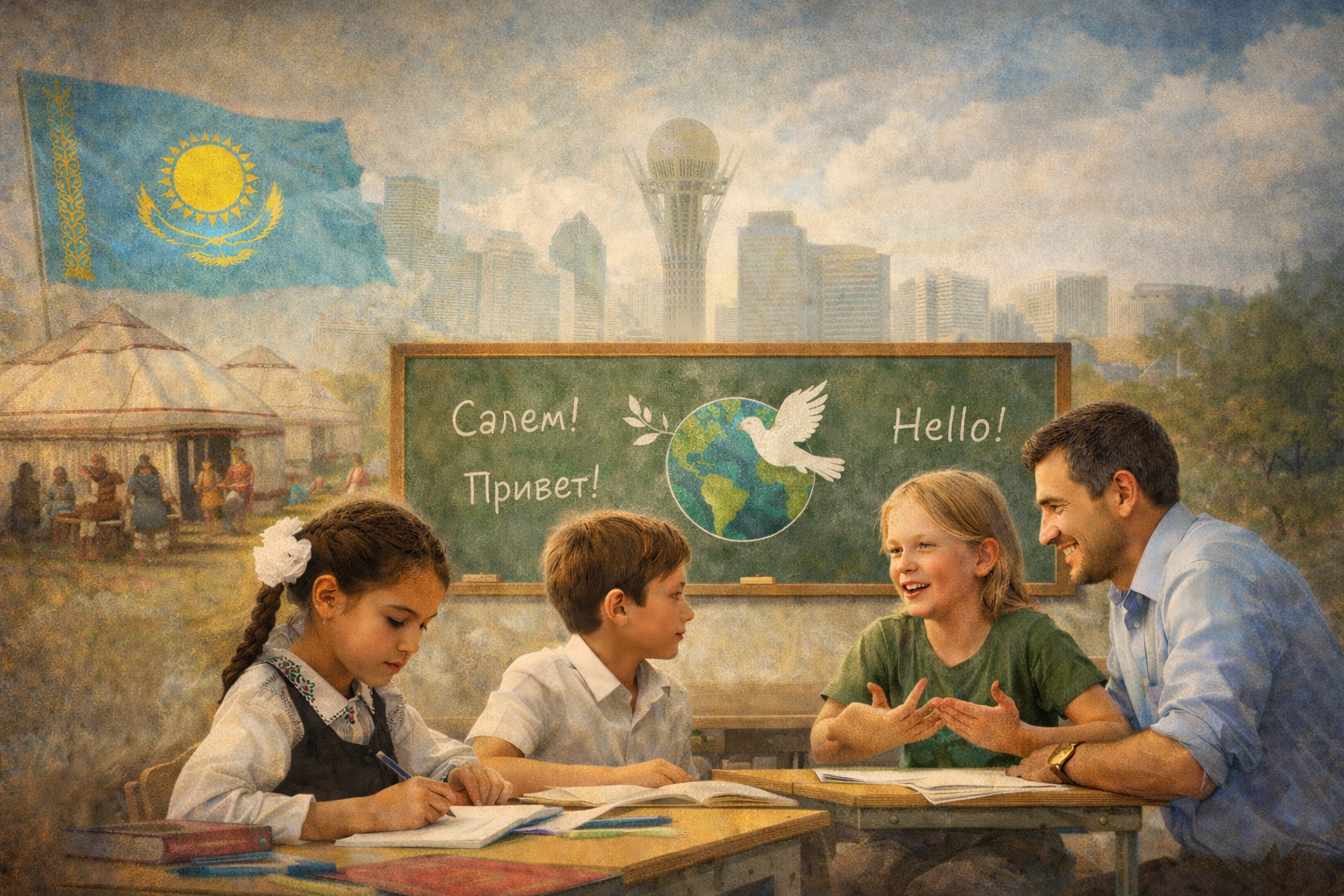
What does it actually mean for education to contribute to peace?

Not peace as an abstract idea or something we reference in mission statements—but as something lived in the everyday interactions between students, teachers, and communities.

We are living in a time where uncertainty feels constant. Across countries, there are tensions—political, cultural, and social—that shape how people see the world and each other. Schools sit directly within this reality.

So the question becomes more immediate: How do we help young people not only to succeed, but to live alongside difference—with understanding, with respect, and with care?


Over the past two years living and working in Kazakhstan, I’ve started to notice that this question is not always named directly—but it is present.

I work in an international school, and many of our students come from different educational and cultural experiences. Some have grown up in systems shaped by the legacy of the Soviet era – structured, academically rigorous, and grounded in discipline. Others are part of a more modern Kazakhstan – globally connected, multilingual, and outward-looking.

What stands out is not the difference between these experiences, but how students learn to navigate them.I remember sitting in a classroom discussion where students were exploring a global issue. What struck me was not just the range of opinions, but the way students approached each other’s ideas. There was disagreement, but it was measured. Students listened, paused, responded carefully. Some shifted between languages to clarify meaning. Others adjusted their thinking as they heard new perspectives.

It wasn’t a lesson about peace.

But it felt like one.

And over time, I’ve started to realise that moments like this are not incidental – they are shaped by something deeper.


What I’ve also started to notice is that this way of interacting does not sit in isolation from the wider culture. Kazakhstan is often described as a country made up of many nationalities, languages, and traditions. There is a strong emphasis on unity – that people of different backgrounds are part of one shared community. This is reflected not just in formal narratives, but in everyday interactions and in how identity is held.

There is a clear respect for cultural and religious diversity, alongside a sense of belonging that does not require people to set aside who they are.

I noticed this most during national and school celebrations, where traditions are not treated as belonging to one group alone, but are acknowledged more broadly – shared, recognised, and valued across communities. It creates a sense that identity is not something that needs to be reduced in order to belong, but something that can be held with confidence alongside others.

At the same time, like any society, there are also layers of complexity. But perhaps that is also part of the point.

Students are not growing up in a perfectly resolved environment. They are growing up in one where difference exists—and where they begin to make sense of that difference, gradually finding their place within it.


Kazakhstan’s history is present in its classrooms. The post-Soviet legacy continues to shape values around discipline, respect for teachers, and the importance of education. These are not abstract ideas – you can feel them in the way students approach their learning and in the relationships within schools.

At the same time, the country is actively shaping a modern identity. Students are learning in multiple languages – Kazakh, Russian, and English – and engaging with ideas that extend beyond their immediate context. They are growing up connected to both local traditions and a wider world. These are not viewed as isolated experiences, but worlds students learn to hold at once.


Working within this context, I’ve become more aware of the role of teachers in shaping not just learning, but relationships.

One of the things I have come to appreciate most is the warmth and care that Kazakh teachers bring to their work. There is a strong sense of responsibility toward students, rooted in values that feel deeply embedded – respect, community, and a genuine commitment to supporting young people.

Students are expected to work hard, to persevere, and to take learning seriously. But this is often held within relationships that feel steady and human. There is a sense that education is not only about achievement, but about how students learn to exist with others.


This is where the idea of peace becomes tangible.

It is not something separate from the classroom.

It begins in classrooms where students learn to listen before responding, where they learn to hold more than one perspective at a time, and where they learn to navigate differences without losing themselves.

In that sense, what I am seeing in schools here feels significant.

Students are not being taught about complexity as a concept. They are living it everyday.


I am still early in my experience here, and I approach this thought with curiosity more than certainty.

But what I am beginning to see more clearly is that there is something important happening in places like this – contexts where history, culture, and change intersect in everyday learning.

This is why I’m starting this 3-part series.

To explore more deeply what it means to educate in a space where multiple worlds meet, and what that might offer to a broader global conversation.

Because perhaps the work of building a more peaceful world does not begin with just policy or strategy alone.

Perhaps it begins in classrooms like these –  where students learn, every day, how to live with difference, how to listen, and how to hold multiple perspectives at once.


This is the first in a three-part series exploring education, identity, and peace in Kazakhstan. In the next article, I take a closer look at what it means for students to live and learn between different educational worlds.

GLOBAL BOOK RECOMMENDATIONS

’t Is the season to make wish lists, to wrap gifts for colleagues, and to curl up with a good book during the winter break. What do teachers read for fun?

In this column I have shared almost 600 books with you over the years. In the New Year I will be posting reviews once a month instead of every two weeks. 

Among all the wonderful children’s books, I have also recommended books for adults over the years: The Seven Sisters series by Lucinda Riley, fun books for teachers by Gervase Phinn, and many more.

This time I’d like to share some titles for educators that have made an impact on me:

Half The Sky by Nicholas D. Kristof and Sheryl WuDunn is an eyeopener. The sub title reads ‘Turning Oppression into Opportunity for Women Worldwide’.

While some of the stories and samples in the book are depressing and terrible to read, they also are important reflections of life for women in many countries. From slavery to sex trade, from education to childbirth and human rights, the examples in this book show us the inequality that still exists and how we cannot afford to turn a blind eye. 

But the authors do not just share the disheartening side of how women are treated, they also offer uplifting samples of how things can change for the better and what we can all do. They also show the consequences of not treating ‘half the sky’ as equal. When women are able to go to school and become literate, everyone benefits. Health increases, even whole economies improve when women are treated more fairly and given opportunities. 

This is an important book from the first married couple to win a Pulitzer Prize for journalism. You will also find games, movies and documentaries inspired by this book.

ISBN 978-0-307-38709-7, Vintage Books

www.halftheskymovement.org

The other book I read this year and would like to share with you, is I Shall Not Hate by Dr. Izzeldin Abuelaish. It is the remarkable story of a Palestinian boy growing up in a refugee camp in the Gaza Strip, and eventually becoming a doctor with a degree from Harvard. That in itself would be impressive. But Dr. Abuelaish lost his family in Israeli bombings in Gaza and yet he continued to treat all people equally, regardless of faith or nationality, and working in an Israeli hospital, calling for people to meet each other to come to know one another. His humanitarian behaviour won him awards and recognition world wide. The book is an example of the impressive goodwill he spreads.

ISBN 978-0-307-35888-2, Random House Canada

There are many more books I’d like to recommend. If you want just a fun, relaxing read over the holidays, try The Secret, Book, and Scone Society by Ellery Adams. These lighthearted mysteries are set in a fictional village in the eastern USA and focus on a bookstore and its owner. You get to know her friends and colleagues. The book mentions many beloved titles throughout. And if you enjoy the first one, there are five more titles in the series with the same name.

And if, like me, you like to travel, click on this link to see an extensive list of books I paired with countries to which I have traveled: https://www.globetrottingbooklovers.com/books

Happy Holidays!

May 2025 bring you many great books and inspired teaching,

Margriet

Margriet Ruurs is the writer of over 40 books for children and conducts author visits to International Schools: www.margrietruurs.com

GLOBAL BOOK RECOMMENDATIONS

Wishing you happy Holidays. I hope that, if you receive gifts this time of year, it will be lots of wonderful books. Here are some global stories about hope, love and peace that we can use around the world.

A Kwanzaa Miracle by Sharon Shayers Gayle with art by Frank Norfleet is a heartwarming story about the neighbors in an apartment building getting together to celebrate Kwanzaa, a relatively new, secular celebration based on African harvest traditions. Ashley and Darryl are scared of mean Mrs. Jackson who always scolds them. Until they discover that Mrs. Jackson lost her daughter and is all alone. Through visits, they come to enjoy their neighbor and even honor her as special ancestor during the Kwanzaa celebration. The back of the book explains the seven principles of Kwanzaa. ISBN 0-439-69003-X, Scholastic

Sélavi, A Haitian Story of Hope by Youme is a wonderful, unique story. Inspired by real children in Haiti, it features a homeless child who tries to find a safe place to live. Soon, he meets other children who help and support him until they all get chased away. He finds a group who tries to give him shelter. When the community works together, they accomplish their goal of building a safe place to live and also a radio station to broadcast and share their stories, their hopes and dream. The radio station is real and so are the characters in this touching picture book. ISBN 0-938317-84-9, Cinco Puntos Press

A wonderful new title by Peter H. Reynolds and his son Henry Rocket Reynolds is All We Need Is Love. This story sneaks into your heart while you are reading it… Poppy and Little One agree, all they need is love. And a soft pillow. Oh, and a roof over their heads. Slowly, their wish list grows until they accumulate more and more and have a house full of things. Then the big storm blows it all away and they discover that, yes, love is really all they need. And a soft pillow! This is a great story for a wide age range that can be accompanied by discussions on how much stuff we really need and what is essential. ISBN 978-1-338-57233-5, Scholastic

Because I Already Loved You by Andrée-Anne Cyr, with art by Bérengère Delaporte is a lovely but sad picture book that can fill a much needed void. The still-born birth or death of a new baby is acknowledged as a very sad event for the parents but not often addressed properly for the young sibling who has eagerly awaited the birth. This story is beautiful and realistic and a good tool to use for families faced with the tragic loss of a new baby. ISBN 978-1-77306-973-9, Groundwood Books

What Is Peace? by Wallace Edwards asks a question that you can expand in the classroom. Is Peace old or new? Is Peace near or far? Is it quiet or loud, captive or free? So many ways to think about what exactly peace is. Coupled with exquisite art full of things to discover, this picture book is rich in both text and illustrations and can be used as a discussion point for students of all ages.

ISBN 978-1443148436, North Winds Press

Margriet Ruurs is a Canadian author of over 40 books for children. Her next in person author presentations will be at international schools in Kuala Lumpur, Malaysia.

www.margrietruurs.com

From Far Away…

Or perhaps from not so far away… These books showcase stories from a variety of cultures and countries that all show how similar we really are. Whether you need courage in Pakistan or a friend in Afghanistan, we all share similar feelings and needs. Through books, we can learn from each other.

Ang Mahiyaing Manok by Rebecca T. Anonuevo and Ruben de Jesus, is a lovely illustrated picture book told in two languages: Filipino (Tagalog) and English.

Onyok is a young rooster who just can’t crow like the others. They are experienced and know just what to do. The old roosters crow day and night. But no matter how hard Onyok tried, he can’t do it and gives up, feeling quite worthless.

His mother and the old roosters support him. They show him just what to do and encourage him to keep trying. And when Onyok finally manages his crow, he vouches to help other young roosters when he grows older. ISBN 971-508-074-X, Adarna House

Crescent Moon Friends

Crescent Moon Friends by Wadia Samadi, Mo Duffy Cobb and art by Lisa Lypowy is a gentle story about Aisha who has to leave her home in Afghanistan, and Amelia who likes to look at the moon. When Aisha joins her class, Amelia becomes her friend. They discover how much they share in values and interests. The girls as well as their families learn much from each other and are enriched by their new friendships. ISBN 978-177-3660967, Acorn Press

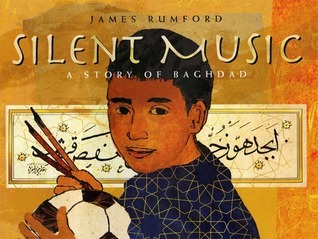
Silent Music, A Story of Baghdad by James Rumford is a skillfully produced picture book for all ages. Ali lives in Baghdad. He loves playing soccer on the dusty streets. But most of all he loves practising calligraphy, just like the legendary calligrapher Yakut. When bombs fall on Ali’s city he, too, fills his mind with peace by practising the flowing words. A beautiful story of peace amid a city in turmoil. ISBN 978-1-59643-276-5, Roaring Brook Press

YouTube Read Aloud:

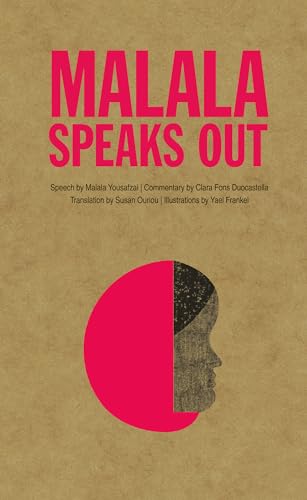
Malala Speaks Out is the acceptance speech given by Malala Yousafzai upon receiving the Nobel Peace Price. This book should be read by any student and educator. “Instead of painting our hands with hanna flowers,” Malala says, “my friends and I used to paint them with mathematical equations.” When ‘education went from being a right to being a crime’, Malala decided to speak out. Her strong voice recounts situations for more than 60 million girls across the world. This powerful speech can inspire many and help them to realize the importance of education. Commentary in the back of the book, by Clara Fons Duocastella help to put events into context. ISBN 978-1- 77306-916-6, Groundwood Books

Margriet Ruurs is a Canadian author of many multi-cultural books for children. She is currently taking bookings at International Schools for the 2023-24 school year.

www.margrietruurs.com