Safeguarding Series #1: A Perspective on Safer Recruitment in International Schools from My Role as a DSL
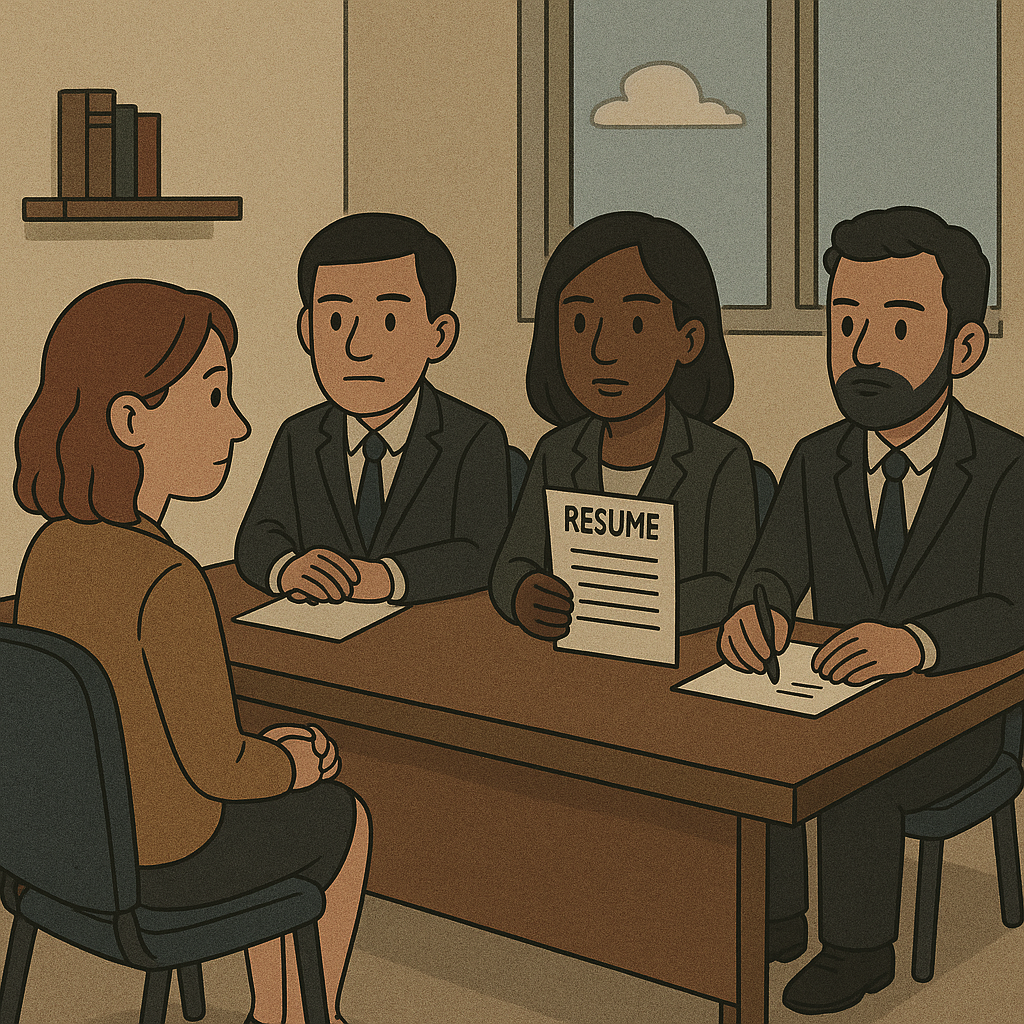
When people ask me about safeguarding, they often expect to hear about policies, disclosures, or risk assessments.
As a Designated Safeguarding Lead (DSL), I’ve come to understand that safeguarding doesn’t begin with a form. It begins with a person. And often, that person is not a student. It’s an adult we’ve just hired.
Safer Hiring is serious business.
And yet, many of us know—quietly, sometimes reluctantly—that these measures alone are not enough. Not in international schools. Not in a world where teachers move countries every few years, where systems vary, and where reputation can hide risk.
Let’s name the quiet truths:
- References can be vague or overly polished.
- Background checks may only tell us who was caught—not who caused harm and moved on.
- Some candidates smooth over CV gaps with charm or vague reasoning.
- In our global school network, we often mistake the absence of a red flag for a sign of safety
We assume that familiarity equals integrity. That silence equals clearance. That good schools only hire good people.
There are moments I pause and quietly ask myself: what if?
I remember the references that made me pause—but came from schools too prestigious to question.
And the time we stopped at two references. It felt efficient. But now, with hindsight, I can’t help but ask: what didn’t we see?
I think about the one candidate I didn’t feel quite right about—but didn’t want to seem “overly suspicious.”
More than anything, I think about how often safer recruitment is quietly treated as HR’s job. In reality, it belongs to all of us—especially to those with the power to decide who walks into our schools.
As a DSL, I know that one poorly vetted hire can undo years of trust built with students and families. That’s why hiring isn’t just the first HR task. It’s the first safeguarding decision.
Practical Questions We Need to Ask (But Often Don’t)
- Have we actually spoken to the person who worked most closely with the candidate?
- Are we accepting clearances from countries that don’t share information across borders?
- Have we asked about safeguarding concerns—not just performance reviews?
- Have we reviewed the candidate’s relational conduct with both students and adults?
- Are there any patterns of emotional manipulation, boundary-pushing, or staff conflict that raise concern?
- Is our interview panel trained to detect grooming behaviors masked as charisma?
Most importantly: Are we willing to pause the process when something doesn’t feel right? Because when instinct is paired with professional judgment, it becomes valid evidence—not just a gut feeling.
A Call to Senior Leaders, HR Teams, and Governors
If you’re on a hiring panel, you are part of the safeguarding team—whether or not you carry the DSL title.
Ask the hard questions. Push for the third reference. Slow down when the pressure says move fast. Question the “but they’re from a good school” mindset.
And never forget: a charming interview does not equal a safe adult.
It’s easy to overlook red flags when time is tight. It’s tempting to shift responsibility elsewhere. But in safeguarding, what’s easy is rarely what’s safe.
We owe our students more than good teachers. We owe them safe ones.
And “safe” doesn’t just mean free of criminal history. A safe teacher is someone who will never shame a child for struggling. Someone who won’t belittle, mock, or emotionally manipulate a student—no matter how talented they are at teaching.
Harm doesn’t always show up in obvious ways. Sometimes, it’s subtle—a comment meant as a joke, a tone that cuts too deep. Sometimes, it hides behind charm, or behind standards that feel just a little too high. And sometimes, it goes unnoticed—tucked into the corners of decisions made too quickly.
Emotional safety matters just as much as physical safety—and that starts with hiring adults who are not just competent, but compassionate. Not just experienced, but ethical. Not just impressive on paper, but principled in practice.
So the next time we sit at a hiring table, let’s remember: The decision we make isn’t just about filling a timetable. It’s about protecting our community.
In the end, hiring is not just operational. It is ethical. It is relational.
And in international schools—where mobility is high and memory is short— hiring is foundational.