Tag Archives: Safety

Hiring Is the First Act of Safeguarding

Safeguarding Series #1: A Perspective on Safer Recruitment in International Schools from My Role as a DSL
When people ask me about safeguarding, they often expect to hear about policies, disclosures, or risk assessments.

As a Designated Safeguarding Lead (DSL), I’ve come to understand that safeguarding doesn’t begin with a form. It begins with a person. And often, that person is not a student. It’s an adult we’ve just hired.

Safer Hiring is serious business.

And yet, many of us know—quietly, sometimes reluctantly—that these measures alone are not enough. Not in international schools. Not in a world where teachers move countries every few years, where systems vary, and where reputation can hide risk.

Let’s name the quiet truths:

  • References can be vague or overly polished.
  • Background checks may only tell us who was caught—not who caused harm and moved on.
  • Some candidates smooth over CV gaps with charm or vague reasoning.
  • In our global school network, we often mistake the absence of a red flag for a sign of safety

We assume that familiarity equals integrity. That silence equals clearance. That good schools only hire good people.

There are moments I pause and quietly ask myself: what if?

I remember the references that made me pause—but came from schools too prestigious to question.

And the time we stopped at two references. It felt efficient. But now, with hindsight, I can’t help but ask: what didn’t we see?

I think about the one candidate I didn’t feel quite right about—but didn’t want to seem “overly suspicious.”

More than anything, I think about how often safer recruitment is quietly treated as HR’s job. In reality, it belongs to all of us—especially to those with the power to decide who walks into our schools.

As a DSL, I know that one poorly vetted hire can undo years of trust built with students and families. That’s why hiring isn’t just the first HR task. It’s the first safeguarding decision.

Practical Questions We Need to Ask (But Often Don’t)

  • Have we actually spoken to the person who worked most closely with the candidate?
  • Are we accepting clearances from countries that don’t share information across borders?
  • Have we asked about safeguarding concerns—not just performance reviews?
  • Have we reviewed the candidate’s relational conduct with both students and adults?
  • Are there any patterns of emotional manipulation, boundary-pushing, or staff conflict that raise concern?
  • Is our interview panel trained to detect grooming behaviors masked as charisma?

Most importantly: Are we willing to pause the process when something doesn’t feel right? Because when instinct is paired with professional judgment, it becomes valid evidence—not just a gut feeling.

A Call to Senior Leaders, HR Teams, and Governors

If you’re on a hiring panel, you are part of the safeguarding team—whether or not you carry the DSL title.

Ask the hard questions. Push for the third reference. Slow down when the pressure says move fast. Question the “but they’re from a good school” mindset.

And never forget: a charming interview does not equal a safe adult.

It’s easy to overlook red flags when time is tight. It’s tempting to shift responsibility elsewhere. But in safeguarding, what’s easy is rarely what’s safe.

We owe our students more than good teachers. We owe them safe ones.

And “safe” doesn’t just mean free of criminal history. A safe teacher is someone who will never shame a child for struggling. Someone who won’t belittle, mock, or emotionally manipulate a student—no matter how talented they are at teaching.

Harm doesn’t always show up in obvious ways. Sometimes, it’s subtle—a comment meant as a joke, a tone that cuts too deep. Sometimes, it hides behind charm, or behind standards that feel just a little too high. And sometimes, it goes unnoticed—tucked into the corners of decisions made too quickly.

Emotional safety matters just as much as physical safety—and that starts with hiring adults who are not just competent, but compassionate. Not just experienced, but ethical. Not just impressive on paper, but principled in practice.

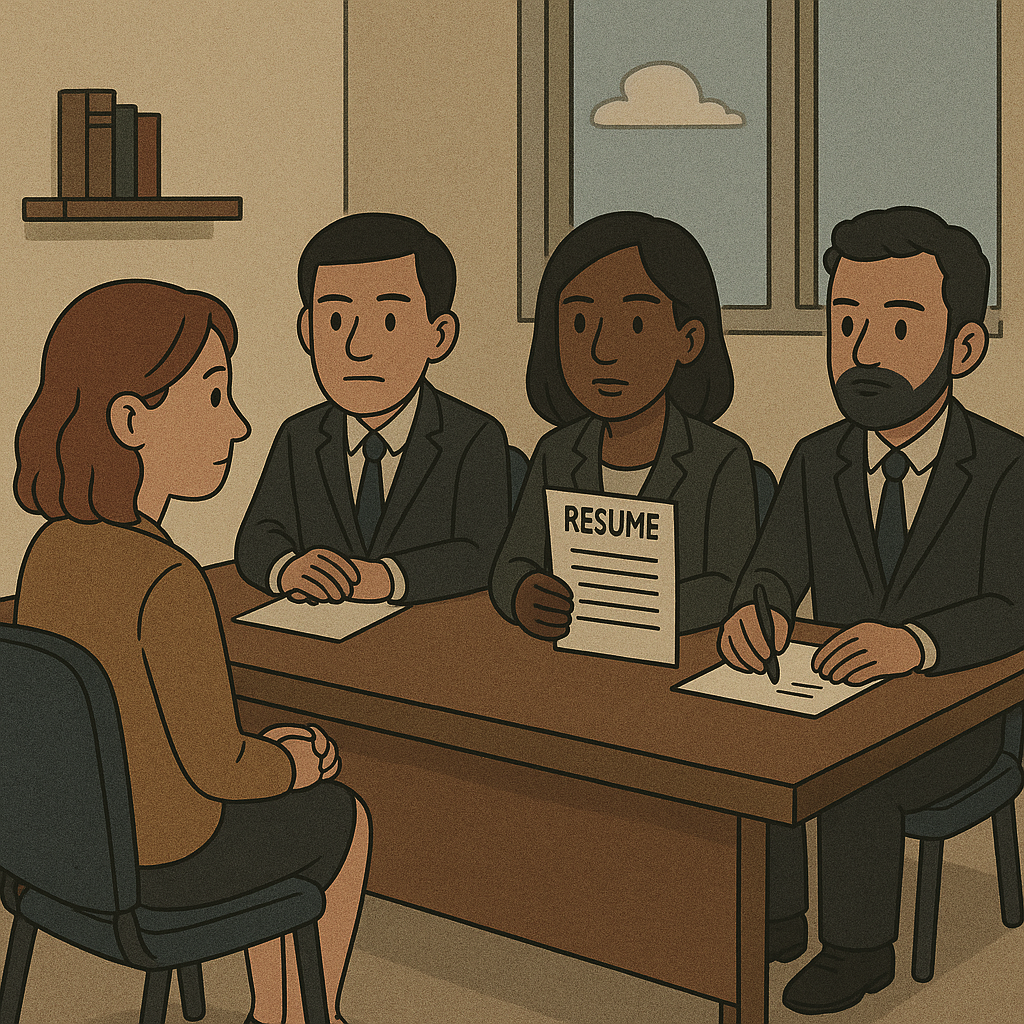
So the next time we sit at a hiring table, let’s remember: The decision we make isn’t just about filling a timetable. It’s about protecting our community.

In the end, hiring is not just operational. It is ethical. It is relational.

And in international schools—where mobility is high and memory is short— hiring is foundational.

Keeping Your Campus Safe: Who Can Do What

By: Tony DePrato | Follow me on Twitter @tdeprato

When a school network is designed, various levels of access have to be created to manage content access. The easiest way to approach this is to place students, teachers, staff, and others into groups. The group is then managed. If an individual becomes untrusted, they become a non-group member, and thus cannot access anything.

Groups have an ID, this is something people never see. To get into the group, people have a personal ID, this is something people use everyday. They never consider all the places their ID (username and password) travels.

In the physical space, group IDs and access indicators are also needed. These need to be designed so they can be visually recognized by members of the community. In addition, buildings and facilities need to be designed to accommodate certain groups, but not allow others.

Group IDs in the Visual Space

I have already spoken about uniforms, but many schools do not use uniforms. Dress code is definitely a manner to identify a group students, but beyond that, there are many other ways to know who is who and what they should be doing.

IDs

Student IDs are often the same for all student, and many are the same template as staff IDs.

IDs for different groups should vary visually. This allows anyone to quickly look at the color, and make a decision about access to facilities, food options, etc. Having to stop and read, requires engagement. Engagement either requires a sense of authority, or it can make a person feel as if conflict might ensue. Colors remove the direct engagement aspect of managing people in physical spaces from those who might only want to report a problem.

For example:

K-5 Students

6-12 Students

K-5 Teachers

No Go Zones

Libraries, Cafeterias, and other large areas should have spaces that are “student only” and “parent/guest only”. These spaces should separate students by age group when possible.

People who are managing these spaces need to manage problems over a larger landscape. They should be able to politely direct anyone to their proper area, without conflict. These areas can be labeled, and color coded. Colors could match IDs (or guest passes) to help everyone navigate.

For example, students in the middle school might have red ID cards. Middle school bulletin boards, information screens, etc., could all have a red border. Anyone noticing a student with a blue ID, would immediately realize that student is in the wrong building. Trying to sort students by size is something teachers try to do, but that practice is not very accurate when students are close in age.

Driving and Parking

Access to campus often starts with transportation. Although schools usually have buses and public transportation options planned, personal vehicles are often loosely managed, or not managed.

Schools tend to believe that issuing parking stickers to people, and then assigning them a parking lot/space, is enough. However, schools need to consider why people need to drive, and if it should be a right or a very limited privilege.

I have worked at one school that had no parking at all. It was in a city, and space was at a premium. If people needed to drive and park, they had to use public parking options. This meant that it was nearly impossible to have unscheduled visitors. Anyone coming to the school would make an appointment to ensure their paid parking was used efficiently.

As people evaluate campus safety, they need to consider that anyone looking to create a negative situation would need a staging area. There would need to be access close enough to the school to allow someone to prepare. Vehicles make excellent staging areas. The closer vehicles are to buildings and entrances, the greater the risk.

In addition, schools are full of children running around and not always paying attention. Vehicles allowed to move within spaces where children are walking can be very dangerous. Ideally, these types of vehicles should only be allowed if escorted or properly directed.

If I really wanted to make campus access secure, I would run shuttles from designated areas. In an ideal world, those areas would be owned by the school, but at least 5 minutes from the campus by shuttle.

A small parking area could be created for certain groups of people, but all visitors and guests would be scheduled and shuttled into the campus.

Students would never be allowed to drive to campus. They would need to park and shuttle; or park and bike/walk to school.

School’s should be friendly communities, but communities are often not in the public domain. Access management is important, and it does not have to be overly complicated or expensive.

Group privilege is a privilege. It can be earned. It can be lost. It must be managed.