Be Who You Needed

So we’re about to start the new school year with kids and it feels great. The first couple of weeks sets the tone for the year in so many ways, and getting off to a positive start is so important when framing the attitude and experience of both teachers and students as the weeks begin to roll on. I spent a lot of time over the past 10 days thinking about what it is that I truly love about the beginning of a new year, and I came up with a quick top 5 list that I would like to share. Feel free to add to this list from your own perspective, so together we can celebrate the beauty and opportunity that a new school year brings to us all…here we go.

        1. The Arrival – I’m not sure there is a better day in the year than the first day of school. Don’t get me wrong, I love summer holidays as much as the rest of you but there comes a time when I really start to miss the kids. Standing there at the gate and waiting for the students to arrive is so exciting for me, and when I see them from a distance getting closer my heart almost bursts with joy. I love watching them re-connect with their friends, and I love how eager, nervous, excited, and anxious they all are to begin this new chapter in their lives. There’s no better feeling in the world than when a student runs up and embraces you in a hug and starts telling you all about their summer adventures. It always brings me back to why I love education so much, and it makes me wonder how and why other people choose to do something else with their lives. I don’t understand how someone would want to do something else besides spending their days with kids 🙂

        2. The Relationships – I love walking around during recess and lunch and watching our kids interact with each other. It’s amazing to watch the new friendships form, and the old friendships deepen, and to witness those courageous interactions when kids put themselves out there to try and fit in. I love popping into classrooms and watching how hard teachers are working to give our kids the start that they deserve, and the effort that they are making to build that ever so important relationship foundation which will carry them through the year. Finally, what’s more inspiring than watching a student walk over to a new kid who is nervously sitting alone, and sit down next to them with a smile, or to ask them to join their table group. I’ve seen this a lot over the past few years at SSIS and it makes me ridiculously proud. I’ve seen teachers do the same as well, and it brings me back to what is really important in education, the relationships.

        3. The Collaboration – In many ways, the start of a new year brings out the best in educators. I find so much joy in watching (and taking part) in the collaborative conversations that happen throughout the school day, strategizing around how to set up the best possible situations for student learning to blossom. I listen to conversations about unit planning and assessment, learning principles, core values, data analysis, student agency, inquiry, personalized learning and extensions/interventions for kids, and all the rest…and it’s awesome. We are so much stronger as a school when we work together for the betterment of OUR kids, and listening to these collaborative sessions truly makes me smile. I love how open we all are to push into each other’s rooms, and co-teach, and co-plan, and work together to find the best ways to engage students, and ultimately, to inspire them to learn…wow. 

        4. The Struggle – I love watching kids struggle a little bit, and get pushed out of their comfort zones. I love watching the messiness of adolescence and the growth that happens when kids make mistakes. I love watching kids take risks and fail forward and then succeed, and I love how a new school year brings all of that out in kids in very profound ways. The beginning of a new school year can be hard for kids as they transition to new grade levels and encounter new and scary situations. The new teachers, new expectations, new classmates, new learning, and new developmental curiosities. The prospect of school, and being young and growing, is indeed a beautiful struggle and watching it unfold before our eyes is a gift that never stops giving. A young person’s life burns so brightly, and this burning is on display every second of every day, and it’s deeply inspiring if you take the time to notice, and become a part of it. Real learning often happens outside of the classroom with kids, and as educators we have the incredible opportunity to teach, to learn, and to be both role models and searchlight souls as our kids struggle to find out who they can be for our world.

        5. Turning the Corner – There comes a time when the “start of the year” is officially over, and we fall into our daily routines. Kids and teachers turn the corner so to speak, and we find a certain level of comfort with our days. Relationships have been formed, schedules have been memorized, expectations have been set, and we move on to the work that lies ahead. We begin to dig deep into the curriculum, we have accessed prior knowledge, we have a sense of where to go with each student, and we begin to settle into the year. This often happens after the first month or so in my experience, and it’s a good feeling, especially if the first few weeks have gone according to plan. There is such a positive feeling when you turn the corner successfully, and I’m excited to watch it all unfold across the school in the coming days and weeks.

Okay, with all that said I want to wish you all an incredible first day and first week with our kids. Go out of your way to make this the best beginning ever, for every student, and prioritize the relationships above all else. Keep your smiles wide and your energy up, and send me a few more reasons why you love the start of a new school year if you are so inclined…I’d love to hear them. Remember to be great for our students and good to each other, and focus on being the person that you needed when you were young…it’ll make all the difference. 

Quote of the Week…

Let us remember: one book, one pen, one child, and one teacher can change the world

  • Malala Yousafzai

Inspiring Videos – 

Shared Purpose

A Stranger’s Gift

Making New Friends

A Great Reminder

Every Kid Needs a Champion (A Classic)

Related Articles –

Investing in Relationships 

Positive Teacher-Student Relationships
Classroom Connections

The Powerful Impact of Collaboration

SEL Toolkit

GLOBAL BOOK RECOMMENDATIONS

Usually I review and recommend children’s books in this monthly column. However, during the summer months I like to also throw in some favourite titles for adult reading. And since you likely work at an International School and enjoy traveling (like me!) you might enjoy these books I recently discovered and loved.

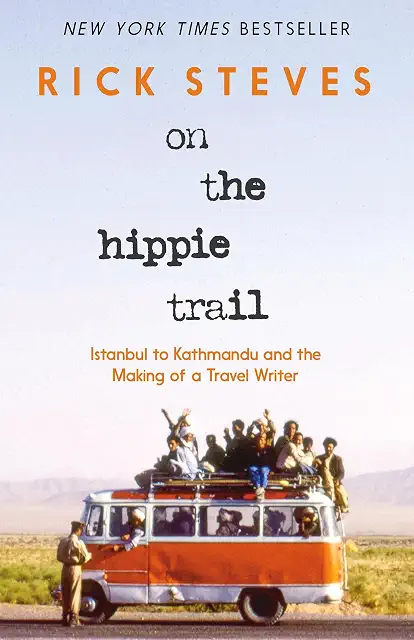
On The Hippie Trail is written by well known travel writer and tour consultant Rick Steves. This enjoyable read describes one of his first travel adventures, in the 1970’s, via Istanbul to Kathmandu. Rick was 23 years old when he set out, with a friend, to travel from America through Europe and the Middle East to Asia. It’s fun to read about the early travels of this adventurer who was to become a well known world traveler – from experimenting with pot to making friends in many different cultures.

I love this quote, when Rick expressed his frustrations with the unreliable train schedules in India as compared to those of Europe: “I treat time like money, I even talk about it like money: I spend it, save it, waste it, and invest it. But in India, time is like bubble gum… it’s a mix of worthless and forever. You just fiddle with it. “

Besides learning about his specific travels, it’s a good book to learn about ethics and how to handle new situations.

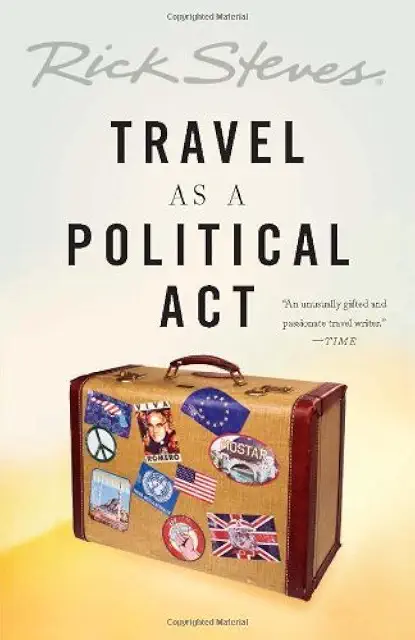
The same is true for his earlier book, Travel as a Political Act. This is not one of Rick Steves’ many travel guides. It does not mention best hostels or affordable hotels. Rather, this is a philosophy of how to travel respectfully and in such a manner that you become a better world citizen. The book is largely aimed at encouraging Americans to expand their horizons and broadening their perspectives by traveling and seeing how their nation fits in to today’s world.

For this purpose, he selected seven destinations around the world and explains that country’s geography, culture, economy and political system, comparing it to the USA and showing its connections to that country. Also for non-Americans, this book can be quite an eye-opener to the interconnectiveness of economies and politics in different countries and how travel effects us all.

On the Hippie Trail, ISBN 978-1-64171-643-7, Avalon Travel, Hachette Book Group

Travel as a Political Act, ISBN 978-1568584355, Nation Books, Perseus Books Group

Margriet Ruurs is the writer of over 40 books for children. She travels extensively and shares her adventures and books here: www.globetrottingbooklovers.com

Helping Teachers Flourish: The Heart of School Leadership

This summer, I had the privilege of teaching and learning alongside almost a hundred teachers and school leaders through two back-to-back courses on instructional supervision and evaluation.

They represented different schools, systems, countries, and stages of leadership. Yet despite their diverse contexts, I was struck by how quickly our conversations converged.

The questions they asked were not just about observations, evaluation rubrics, or instructional frameworks themselves. Instead, they revealed something much deeper.

How do we create schools where teachers continue to grow, so that every student has the opportunity to flourish?

That question stayed with me long after the courses ended because it challenged me to think more deeply about what it really means for a school community to flourish.

We often talk about student flourishing, but perhaps we don’t spend enough time reflecting on what flourishing really means.

To flourish is more than to achieve success.

It is to continue growing.

To be challenged while feeling supported.

To develop confidence through purposeful practice.

To find meaning in what we do.

To belong to a community that believes we can always become better than we were yesterday.

If this is what we hope for our students, shouldn’t it also be what we hope for our teachers?

Teachers do not and should not stop learning the day they enter the profession. Like every professional, they deserve opportunities to reflect on their practice, receive meaningful feedback, refine their craft, and continue growing throughout their careers.

Perhaps this is where our work as school leaders matters most.

Our influence on student learning is rarely direct; it is multiplied through the teachers we support every day.

Throughout the courses, these conversations surfaced again and again through questions like:

  • How do we make classroom observations meaningful?
  • How do we ensure feedback leads to growth rather than compliance?
  • How do we balance operational demands with instructional leadership?

As I reflected afterwards, I realised they were all pointing towards the same question:

What conditions help teachers grow?

Four conditions kept emerging.

  • ClarityLeaders create clarity by establishing a shared understanding of excellent teaching.
  • TrustLeaders create trust by making coaching the purpose of supervision.
  • EvidenceLeaders strengthen professional judgment by grounding feedback in evidence.
  • TimeLeaders create the possibility for growth by intentionally protecting time.

Each of these matters on its own, but together they create the conditions in which teachers can continue to learn, refine their practice, and flourish.

Clarity

Teachers deserve a shared understanding of what excellent teaching looks like – not as a checklist to comply with, but as a framework grounded in research and the science of learning. Shared standards create a common language for professional growth and ensure that our feedback is anchored in evidence rather than individual preference.

Trust

Professional growth happens when supervision becomes a coaching conversation rather than a performance exercise. Teachers are far more likely to reflect honestly, take instructional risks, and refine their practice when they know the purpose of feedback is growth, not judgment.

Evidence

Professional judgment should be informed by patterns of practice and their impact on student learning and not isolated observations or personal preference. Evidence collected over time allows us to make thoughtful decisions about how best to support each teacher’s continued growth.

Time

Perhaps this is the condition we talk about least, yet it may be the one that determines whether all the others are possible.

Time to be present in classrooms.

Time to notice.

Time to listen before we speak.

Time to ask questions that provoke reflection rather than simply provide answers.

Time to coach.

Time to celebrate growth.

Time to learn alongside our teachers.

As another school year begins, I find myself returning to one simple truth: leadership is measured not only by the people we help grow, but by what we intentionally make time for.

After all, our calendars are often the clearest reflection of what we truly value.

Perhaps flourishing schools do not begin with programmes, initiatives, or strategic plans.

Perhaps they begin with leaders who intentionally create the conditions in which teachers continue to flourish.

So, as I prepare for the year ahead, I find myself returning to one simple question: What will I intentionally protect this year so that my teachers have the greatest opportunity to flourish?

What the heatwaves are teaching us about education

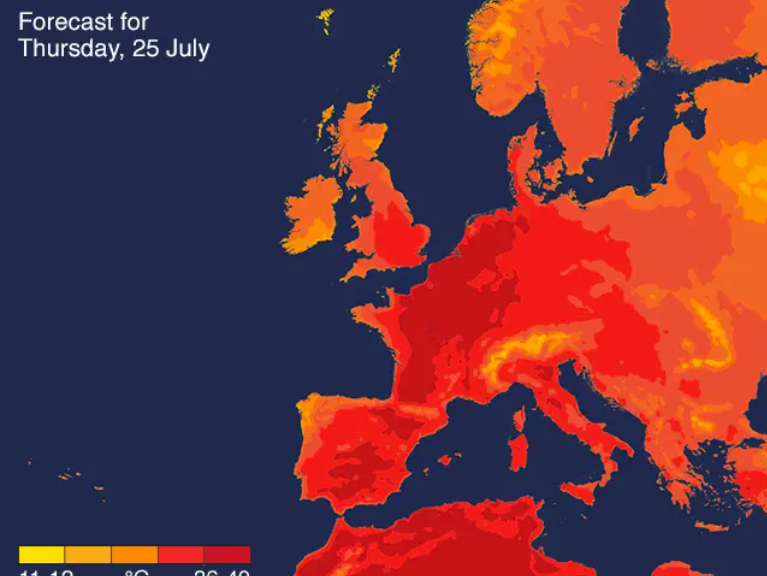
Europe is warming at a rate that is twice the global average. According to the European Commission’s Climate Action statistics, there were over 60,000 heat-related deaths in 2022 and over 47,000 in 2023 in Europe alone.

Recent summer heatwaves have exceeded 40°C (104°F) in the UK, France, and Spain, causing widespread drought and devastating wildfires.

It has become impossible to pretend that this climate deregulation is not a result of human activity. We are in the Anthropocene era and all the graphs and projections show it is getting worse quickly.

Over social media, many have criticized the European continent’s inability to deal with the heatwave because of a lack of infrastructural preparedness. Buildings and infrastructure are outdated in terms of insulation, passive cooling, or ventilation. Air conditioning is rare, which is understandable given the amount of energy it uses.

What is the lesson in all this for us educators?

While greening the curriculum tends to focus on individual behaviors and understandings that can reduce climate change, such as reducing our carbon footprint and understanding ecologically compatible ways of being, there are two other questions to consider.

Affect and Systems Thinking

First, the notion that the deeper route to greening the curriculum is through an affective approach, developing pedagogies that put learners in front of the beauty of nature and nurturing a love of nature within them. If we can develop this deep-seated love, we will surely be planting the seeds within young people that will drive ways of being that respect the ecosystem and care for it. Ways of doing this include field trips, outdoor learning, greening the campus and making the splendour of the wild express itself in the curriculum and the site.

Second, it is essential to teach a systems thinking approach to ecology: understanding how trade laws, markets and legislation have the overwhelmingly greatest impact on the climate. It is not by changing the consumer habits of each individual within an ecologically negative, plundering system, that real change will be activated. The whole system needs to be revised and this requires leadership, coordination and socioeconomic and political change. The teaching of economics, history, science and politics needs to take this into account, without turning the curriculum into an ideological proselytisation but at the same time ensuring that students are empowered to understand fully the complexities, externalities and interrelationships that define climate change and could help stop it.

What the World Cup Taught Us About Assessment

The contrast between the World Cup third-place playoff and the final was stark. In the former, England and France scored 10 goals in a palpitating, fluid game that kept spectators on the edge of their seats. Some of the goals were spectacular, there was a hat-trick, and at the end, a group of French and English players huddled together in a fraternal gesture. It was a fast-moving, dynamic game with an emphasis on scoring rather than defending.

The actual final between Spain and Argentina, on the other hand, was what so many finals have become: theatrics, diving, shamming, wasting time, red cards, and ending , of course, with a meagre scoreline after extra time. There was a lot that had nothing to do with the actual football while players spent their time exhorting the referee to give a yellow or red card to the other side and putting pressure on him at every play. The number of players who suddenly fell down, dozens of metres away from the ball while shamming a foul, was ridiculous. None of this takes anything away from a well-deserved victory by Spain, it is the style of play I am discussing here and what caused it.

So why was there such a difference in behaviour between these two finals?

One reason might be the difference in stakes. When you are playing in a final, the fear of loss is as great, if not greater, than the will to win, and this can create a sclerosis which essentially spoils the game, making it sterile and fundamentally negative. In the third-place game, on the other hand, the stakes are more symbolic, there is more risk-taking and free expression. You will rarely see players break down in tears losing such a match as they do in the finals.

This leads me to one of the most important principles in experimental psychology and the science of assessment: ecological validity. If a test is ecologically valid, it means that performance on it predicts behaviour in the real world. The more authentic an assessment is, the more natural the test-taking conditions, the higher the ecological validity.

If what we are looking for in forward-looking assessment systems is how to test 21st-century competences, such as creativity, criticality, intra- and interpersonal intelligence, systems thinking, and lifelong learning, then the conditions under which these are assessed should be as natural as possible. How do we ensure that students’ creative juices are flowing? How do we ensure that the test is not interfering with their critical thinking but allowing it to express itself? How do we ensure that the structure of the test-taking conditions does not distort the results?

The problem with high-stakes assessments, like the final of the World Cup, is that they bring out behaviours that are not actually the ones we are looking for, unless those engaged are able to ride above the stress and pressure and enter a flow, which can be done, but is very is difficult for experienced athletes to do, let alone high school students.

Perhaps the final was distorted by the stakes, which were so high that it was not an ecologically valid situation, if what is important to us is the beauty of the game and not the result and if what we wish to see happen in a football match is high quality football and not technical shenanigans . Ironically, the lower-pressure third place playoff, by being less stressful, created these conditions much better.

We should view the testing conditions we create more as a third-place playoff than a final, releasing students of the fear of failure that inhibits a joyous, free-flowing expression of competences. Let’s continue to work together in schools and universities to ensure high ecological validity so that the beauty of learning rather than the pressure to perform develops. Alternative assessments such as projects, portfolios, internal assessments, and other naturalistic, long-term tracking of competency development tend to do this better than the traditional high-stakes, narrow terminal assessment we have been using in schools for the last 200-odd years.

Dear September

Some thoughts and reflections from a year of learning, sharing, and leading workshops, keynotes, and coaching for school leaders and educators, and, more importantly, teaching children ages 3 to 11. This year that thinking became a letter, written to September. 


Dear September,

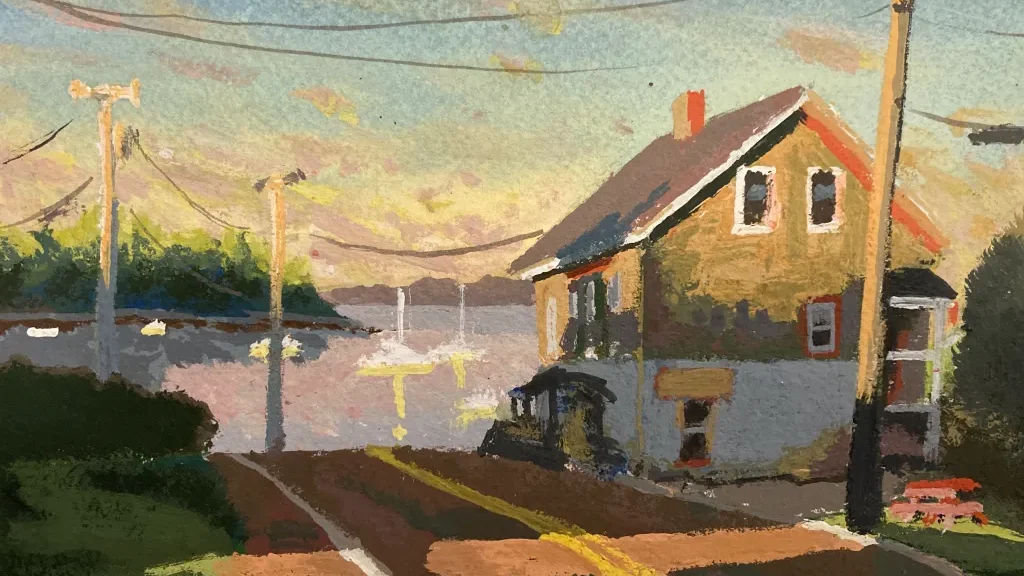
Morning light study by KiloBlimp

I was thinking of you as an opportunity to begin, even though it’s the fall and it seems like the end of a season. For many educators, September feels different after a summer of rest. You come back with hope, with excitement, ready for what’s ahead.

As I write to you in June, after a full year, I have some thoughts, and maybe some anxieties, about what you’re going to bring to me, to my world, to the work I do supporting educators in schools. How this accelerated change surrounds us, mainly shaped by geopolitics and technology. What can we expect? I’m both excited and apprehensive.

Two things really stuck out this past year. One, doing the podcast I co-host International Schools Podcast, a guest, Warren Apel, Director of Technology, mentioned this idea, “the AI tool you are using today will be the worst tool you will ever use.” Part of this change is AI moving from answering to doing. That resonated, because it connects to how fast things have changed. I think there have been three or four moments this year where suddenly I felt a jump, in capacity, capability, in just how powerful this is becoming.

And then, facilitating workshops, I noticed participants are often bold in the breakout rooms, really willing to reframe school, to challenge what the value-added benefit of a human is in a world more and more run by AI. Another guest on the International Schools PodcastAdam Morris, Product Director: Integrations, Faria Education Group, shared the idea not engaging with AI is pedagogic malpractice. That got me thinking, part of what we’re doing wrong is thinking of AI as a tool, when actually it’s an ecosystem woven into everyday life, and keeps growing, often faster than we can keep up with.

And that pattern, bold ideas in the room, turns into caution once people return to their own context, I think it’s partly because we’re not aligned in our boldness, not all willing to start over, to think of the moment and the future rather than letting the past dictate. The hesitancy to be bold in a school setting has a lot to do with timetables, exams, the busyness, the organisational trappings, getting caught up in being human, in the feelings and emotions and seasons of how much capacity you actually have. What does it mean to change, not just enhancing what we already do, but really thinking from a blank slate. Whatever we did before, we’re not doing again, we’re thinking of something completely new.

I do this myself, in my own workshops and keynotes. I’m aware that if you provoke people, push them outside their comfort zone, there’s uncertainty, and uncertainty brings an emotion that can be defensive, a discomfort. Often the response is to push back, another is to ignore it, run from it. So I’m mindful of how important it is to stay relevant, and true with what people are actually dealing with, even though accelerated change often feels distant until it hits us personally or professionally.

But maybe we should be more uncomfortable, more often. Maybe if we got used to discomfort, we’d build greater resilience, greater capacity to adapt with agility. Not that people aren’t already adaptable, but the kind of adaptation this moment asks for, with AI ecosystems accelerating the way they are, is different. You take the hype with a pinch of salt, but there’s a sense that something is taking place, and it’s bigger than us at times.

This is why I want to get bored this summer. You know those rainy days as a child, nothing to do, sitting in your room a little annoyed, your parents telling you to keep busy, and then suddenly you start making something out of nothing. A toy off the shelf, a piece of paper, moving the furniture around to build a house, something imaginary. Just that capacity to sit there with nothing in your head and create anyway.

There’s no doubt the seamlessness of these AI tools is addictive. What’s easier than being able to quickly subcontract out our thinking and get something else to do it, maybe more efficiently, with greater depth than we are? This idea of cognitive offloading is something Tim Cook, who writes on cognitive privacy and AI in education, a guest on the International Schools Podcast describes well and shares in his writing, the difference between adults, who can lose a skill and still get it back, and children, who never built it and have nothing to get back to.

Think of what children have growing up around them, Alexa at home, watching parents talk to a chatbot, the sense that the answer is just there, that the process, the heavy lifting, doesn’t need to happen. Just the transaction, and the dependence on it. That might be fine for us adults, who’ve had practice with the grit of learning. But if we don’t protect that for children, if we don’t make sure they still engage with the struggle, they’re going to lose something they never had the chance to build. And for ourselves, we have to keep reminding ourselves, critical thinking, the heavy lifting, the resistance, the adaptability, these are essential. We have to be the guardians of that, however exhausting, however efficient the shortcuts on offer.

In my teaching context, I often observe this with the students I work with. They want the immediate answer, struggle to focus for long, avoid having to problem solve, and default to the teacher, for help or the answer. They want it now. And that need for instant answers comes at the cost of creativity, because if we can’t sit with something on our own, push through the difficulty, the effort of getting to a new idea, what are we losing? We need to teach this as a skill and a way of thinking to support a change in mindset against just wanting a quick answer and letting someone else do the thinking. We as educators need this too.

September. We want to change. But good grades, what parents and students expect, and schools still built for another time, all hold us back. How do we get comfortable with discomfort? How do we learn a new adaptability, completely different from our past?

And in the many conversations with school leaders, I notice we really want rules, a policy we can carve in stone and live by. We want artificial intelligence to be a set of tools we control, this one’s appropriate, this one isn’t. I understand why consistency, certainty, and rules matter. But are we willing to be flexible? The policy might need to shift every few months, even every few weeks. It’s really guidelines, not policy, knowing tomorrow it could change again. We need to model that with children too. Whatever tool we tie ourselves to today, ten more powerful ones are already coming, ones we don’t even know about yet. Our policy will already be behind.

This is a systemic change. It’s about a system, not a tool. The way we usually work isn’t built for this kind of accelerated change, systems that suddenly show up at home, in the car, online, everywhere around us. What can we do as leaders to keep remembering, the tool is not the focus. It’s the value-added proposition of us, of being human. How do we adapt and stay open to change, so that the value of being human is timeless whatever the latest AI tool release or upgrade ? Humans need to stay at the centre of this story, and we have to keep checking that what we think is right today might not hold tomorrow.

One small example of what that looks like in practice: I have a framework called CRITIC, built out of a lot of reading, a lot of other people’s work, nothing original really, just my own adaptation of what I’d learned. In one workshop, I gave it to a group of teachers as something to take and try between sessions. When we came back together, two of them shared what they’d done.

They’d used it with their own students, treating whatever the AI gave them not as the answer, but as something to question. What is it actually saying? What reasons does it give? What’s missing, a number, a source, an example. What other view could there be. What happens if we believed this and it was wrong. What would we actually go and check? And the teachers said their students started noticing the AI’s answer had a kind of curated voice to it, a perspective, even something like empathy that wasn’t quite real, and the only way to catch that was to slow down and really interrogate it, almost like being a detective.

That, I think, is the deviation worth having. Not using AI less, not using it more, being intentional, willing to plan and think deeply about how we put it in front of students, as a critical friend, a challenger, something cross-examined rather than copied. Because if we do that, it can only grow a student’s ability to think independently, instead of repeating back whatever was generated for them.

But I want to be honest about something that unsettled me more than I expected. I was working with a powerful AI tool for a short time in June. With it, you could give it complex tasks and it would generate artefacts, feedback, analysis, multiple engagements, as a critical friend or even as a challenger, and the quality of what it delivered was, for me, quite something. But then suddenly it got shut down, I won’t go into the details, by the time anyone reads this, something will likely have changed again. What I suddenly realised, and I’m guessing many others felt the same reading the articles afterwards, was that these systems we depend on are a bit like nectar. You taste it and realise how good it is, you want to use it, put it to work, and then you suddenly realise what happens when it is turned off. A government can order something this powerful to be shut down overnight, and the company has no real choice but to pull it from millions of users. And it becomes a bargaining chip. Maybe only a certain profile of people get to use it. Only certain companies. Only certain countries.

And suddenly the geopolitics of it, how technology companies and the power they’re generating through these AI systems, the infrastructure required, the impact on the environment, and then when these things become autonomous and powerful enough, how a government, or even an organisation, if they have the authority and the capacity, can shut everything down, and suddenly you’re left with nothing. It’s a bit like being an addict, and suddenly you don’t get to have it, and you go through the withdrawal. This made me think about how powerful these AI ecosystems, companies and technologies are. And how governments and organisations can really control our access to them, whenever they want

So maybe, September, what I’m really asking of you is for that renewal, the idea that yes, it’s the fall, it’s the end of a season, but I want to take that as a chance to think of it completely differently. Maybe September is the new spring. However uncertain things are, however much these systems will continue to reshape the world around us, I’m still excited by the fact that I’m human, that I have this capacity, if I give myself permission, if I plan for it, stay disciplined, and don’t reach for the shortcut, to go and get bored. Really bored. And then see what comes. 

John

Thanks to Warren Apel, Adam Morris, and Timothy Cook for the conversations that shaped this letter. And thanks to all the educators, workshop participants, articles, and podcasts I learned from this year

If AI Can Pass the Exam, the Exam Is the Problem

Recent meta-analyses and research have shown that reasoning-focused models (OpenAI’s o1 and GPT-4) outperform medical students on examinations, clearly and systematically beating the median score and, in most cases, the highest-performing humans’ scores too. The assessments in question were multiple-choice tests, the ultimate symbol of mass assessment.

Last year, the Stanford Human-Centered AI Index tracking data showed something else: when AI is given more time to “think” on examination-style tasks, previous human benchmarks are destroyed. On an International Mathematical Olympiad qualifying exam, an optimized AI model with more “reasoning” outperformed standard AI models (which already outperform humans) by over 60%. In other words, AI will outstrip humans even more on classical assessments if given more time.

Should it worry us that AI can outstrip humans easily on examinations and that enhanced AI will outstrip us even more?

To me, the answer is yes, but not so much because of AI and more because of the type of assessment we have been using to sort students at exit and entry matriculation points for centuries.

In my book Changing Assessment, I explain the main problems with high-stakes, narrowing assessments. Essentially, authentic learning and genuine critical or creative thinking are superseded by timed performance and the ability to cope under a certain, artificial type of pressure. Furthermore, sociologically advantaged students almost always do better, suggesting that examinations are not actually that meritocratic (wealthier students use extra tutors and have access to more test-taking-engineered environments). Finally, the massive scale and standardized nature of these assessments relegate most of the learning outcomes to the lower levels of Bloom’s Taxonomy, favoring knowledge retention and proof of understanding over judgment and analysis. Hardly any analyses of 21st-century competencies see these as particularly valid for the needs of the future.

Now that we know that AI can outperform humans on examinations, what exactly are we examining for? The deeper mechanism behind examinations has always been to classify individuals and groups, which fits the financial model of late capitalism built on scarcity rather than general distribution: the idea is for some to come out on top and others at the bottom. But AI now comes out on top, so where does that lead us in an already somewhat broken model?

The answer is, in my mind, actually much simpler than we might think, and it applies to all assessments, not just examinations.

First, much more emphasis is needed on oracy, discussion, and interview-type assessments. AI cannot be used in these, and they are far more indicative of the type of life-worthy assessment we should be developing in young people, preparing them for job interviews, presentations, and social exchanges.

Second, if we are to test written production, knowing that students can and will use AI (perhaps even inadvertently given its ubiquity), assessments need to take this into account and allow students to use AI openly, to cite that usage openly, and to integrate their own thinking into the work. I asked AI to give examples of what an AI-integrated examination question might look like, insisting that such an assessment push students to think for themselves and not just to rely on AI (which is a slightly ironic scenario), and this is what it came up with:

DisciplineTraditional QuestionAI-Integrated Redesign
History & Political ScienceAnalyze the causes of the French Revolution, focusing on the roles of the three estates.Generate a royalist speech using AI, critique its historical blind spots/biases, and rewrite sections to reflect a more accurate, deeply nuanced historical perspective.
Literature & Creative WritingCompare and contrast the themes of isolation in Mary Shelley’s Frankenstein and Kafka’s The Metamorphosis.Have AI build a movie plot based on these themes, analyze the generic tropes it generates, and write a unique character arc that intentionally subverts those clichés.
Environmental Science & EconomicsWhat are the economic benefits and environmental drawbacks of transitioning a city to 100% solar energy?Generate a standard solar transition master plan using AI, then write an adaptive amendment to salvage the plan after introducing a chaotic, real-world “Black Swan” crisis.

What’s interesting is that each task is much higher up the rungs of critical and creative thinking than traditional assessments, even though (and this is my human critique of AI’s generated solutions), with access to AI, the AI-integrated responses could potentially be done uniquely using AI. On this, at some point, there must be faith in the test-taker’s deontological code, and this should be made clear in the school’s academic honesty policy. Presuming that this is the case, these answers will show greater cognitive application than traditional examination items and also allow students to use AI in formulating their responses, which is something that is happening in the world of work already.

If AI can pass the examination, it’s not AI that should be the focus of our attention, but the way we design the exam. This is a focal point for all educators designing assessments in today’s fast-moving era of VUCA for the long-overdue valorization of higher-order thinking skills.

The Earth Rebounds. So Do Teachers.

Teachers carry enormous weight. Summer is not simply time away from school; it is the season when we regain equilibrium. My yoga teacher regularly invites me to slow down and hold a pose professing, “it is only injury which is likely to happen when you move too fast.”  Any glint or murmuring to slow down grows louder when I consider who I probably have cited more than anyone else in my writing the past years, Paul Salopek. After 13 years walking across the planet, Salopek has taken an estimated 30 million steps along the 42,000 kilometer journey, an experiment he calls, “slow journalism.” A level of patience in near accordance with geologic time. Yet, for most of us, our pace of life seemingly continues to only quicken, resembling anything but slow. Which maybe makes it fitting to consider the importance of “summer” and how a fundamental geological term called isostasy might be relatable.

Isostasy: Finding Equilibrium

Isostasy is the Earth’s way of maintaining balance. Imagine the Earth’s crust floating on a softer layer beneath it, much like a wooden raft floats on water. When extra weight is added, such as a massive glacier or thick layers of sediment, the crust slowly sinks. When that weight is removed through melting ice or erosion, the land gradually rises again in a process called isostatic rebound. The Earth does not rebound instantly. Neither do people. Recovery requires time, space, and patience.

Students and teachers need time to recover after the weight of a demanding school year. Maybe not at quite the same scale. Summer is often described as time off, but that phrase misses the point. For educators, summer is not an escape from work. It is part of our work. A season of recovery, reflection and renewal. Energies hopefully rise, while curiosities and creativity stir. The pause may even precipitate the gaining of new perspectives.

Recovery begins as soon as a weight is lifted. Whether it be rebound from rapidly melting glaciers, or the restorative choices students, teachers, and administrators might choose in the summer. For me, renewal rarely comes from simply resting. It comes from pursuing experiences that reconnect me with curiosity, challenge, and purpose. Also, the discovery of new places, internally and externally from the self. 

An Unexpected Invitation

On first appearance I would have guessed it was the choice to lead a teenage group on a ski trip to Patagonia, would provide the most isostasy. 

Co-leading summer trips are usually the best professional development opportunity. Yet, it was an email invitation that brought a degree of renewal far beyond what I might have imagined. 

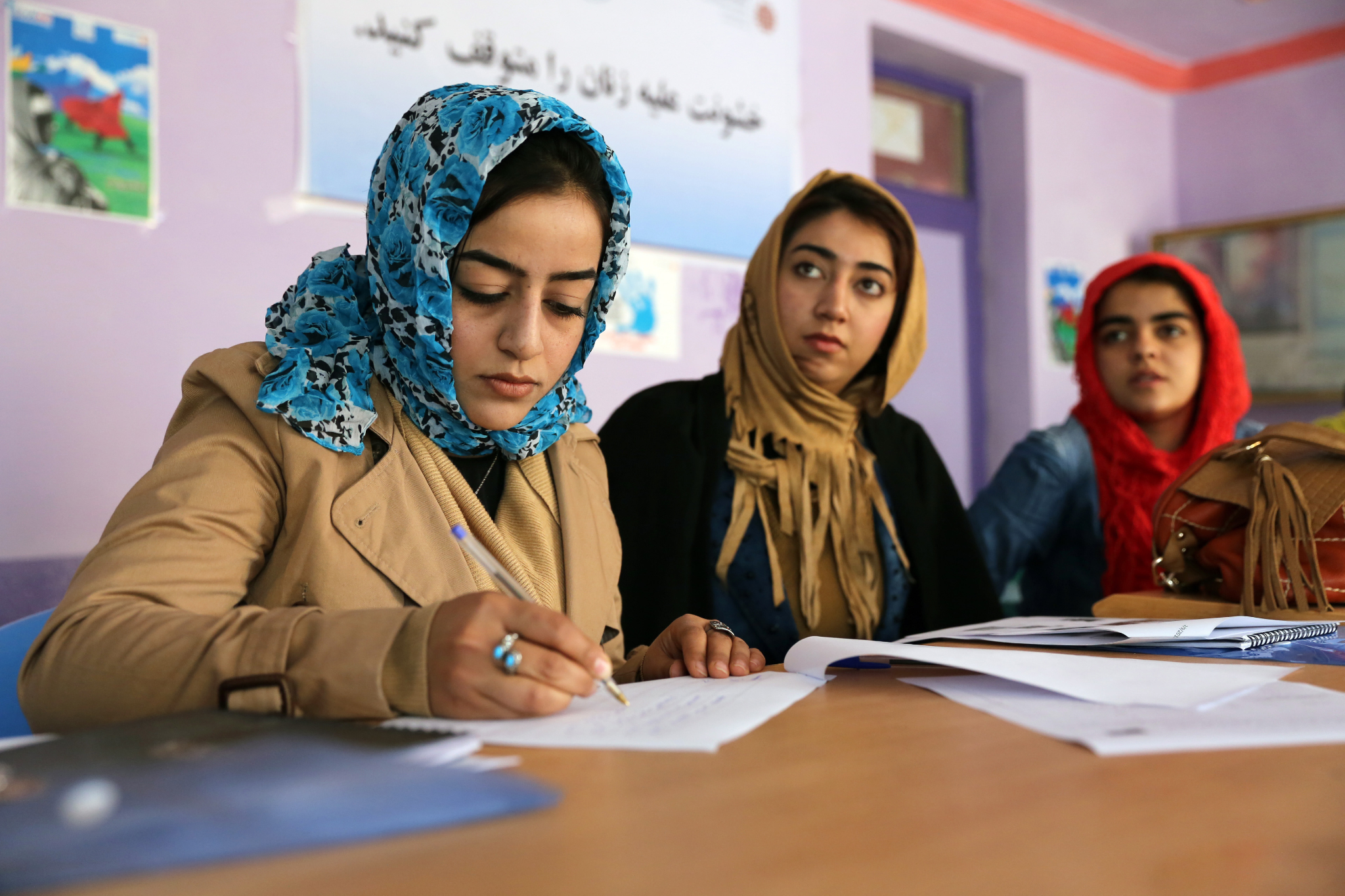
The offer was to lead an online class for girls in Afghanistan. The subject of the e-mail, “Volunteer with Awesome Afghan Scholars” captured my attention. I opened the message and read “I have become a board member for the Alekain Foundation, a nonprofit that provides US-accredited high school education opportunities for girls and young women in Afghanistan. This summer, we’re looking for volunteers to implement project-based or skills-based online “camp” offerings.” The wheels of my creativity quickly began to turn.

When Purpose Becomes Curriculum

What might I offer that would be meaningful?

I stewed over this for a short while.

With absolute autonomy, I started with purpose and then began to develop content. Then determine duration and what would be asynchronous. Further, what value could be added synchronously. In the end, I titled the course, “Finding Your Why: Stories, Walking, and the Power to Shape Your Future.” The course overview: Why am I here, and how can I make a difference? Through stories, observation, reflection, and conversation, students will discover how purpose grows through curiosity, relationships, and small acts of courage. Drawing inspiration from Simon Sinek’s idea of finding your “Why,” the global walking journey of Paul Salopek, the community-building stories in Seedfolks, and anthropology’s focus on understanding people and cultures, you will learn to see your communities (and hopefully yourself) in new ways. No classroom is required. The world becomes the classroom!

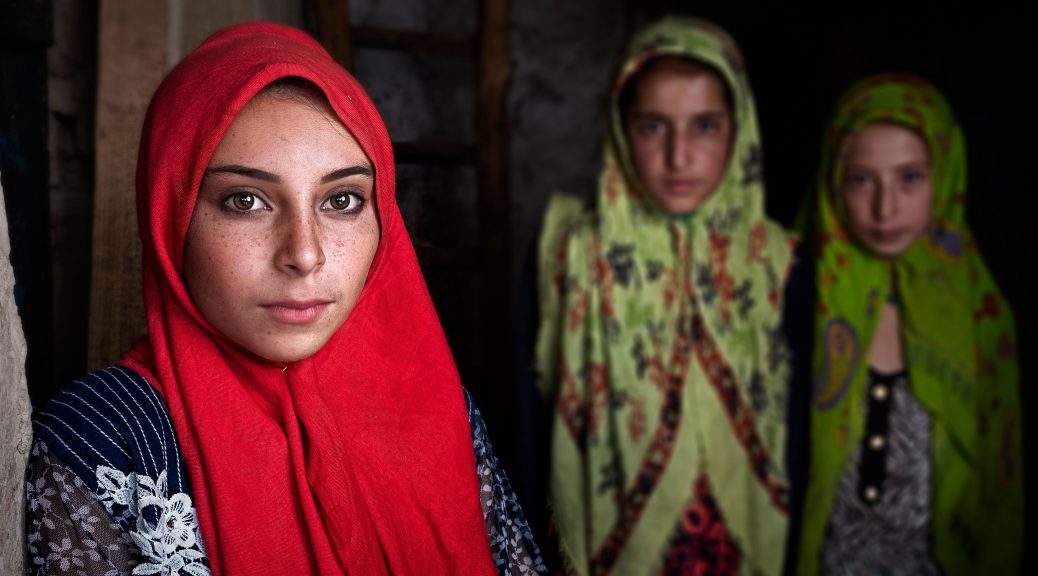
Twenty girls, young women, signed up. An absolutely invitational approach was taken. No grades and deadlines kept loose. Yet sort of a sprint as it was a two-week course. Five years ago the Taliban seized power in Afghanistan and girls were banned from secondary school. In September 2024 the Taliban’s Higher Education Ministry confirmed that the Taliban’s supreme leader and his ministers vow to “never open girls’ schools.” Rivers can be dammed, but water will always find another path. Determined to learn, but also lead a different course forward, the girls do more than show up. So respectful on Zooms, emoticon hands would rise up in numbers or students would politely interject, “Sir, can I please speak?” I even received a message, “Thank you dear teacher.” Courtesy, grace, and genuine gratitude in abundance. 

Discovering Purpose and Possibility

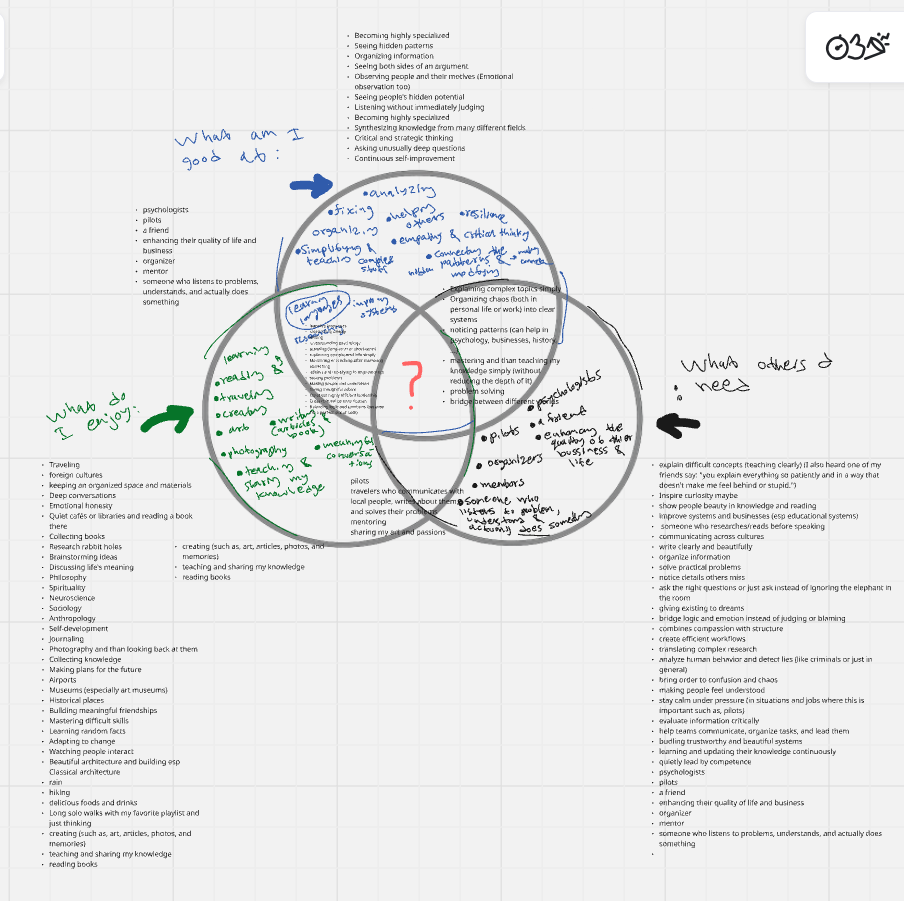
In one of the opening activities, an assignment asked students to consider what they were good at, what they enjoy, and what the world needs. I similarly begin this with my in-person students and on more than a handful of occasions have borne witness to students struggling to respond. And “playing video games” or “Tik Tok scrolling” are not uncommon listings in the “What I am good at” segment. This go around, any expectation I could have had would be superseded. And this was only the beginning.

Example of student response to a version of Ikigai

With each assignment, learning resembled what I believe. Exploration, creativity, and depth. My heart welled up repeatedly hearing messages like this one: “I want to use education to open doors for people who have been denied them, just as I once searched for those opportunities myself. My purpose is not only to achieve my own dreams but to help others believe that their future can be different.” Google Doc comments and questions always followed up and the course took on a conversational feel. 

The Light That Continues to Shine

“Sir, before 2002 in Afghanistan many people didn’t have electricity and used an alekain (lamp). This was a basic tool for brightening their nights.  I was born in 2008 so I don’t know much about life before me , but I don’t think it was so nice.” Another student stayed at the end of one of our Zoom meetings to personally share how she often ponders, “I think if everything didn’t happen with the Taliban, I would just be a normal high school student.” Her voice carried a quiet lift of optimism. Grateful for working as a teacher, in marketing and now sales. All the while taking every opportunity to advance her studies as well. 

I am so glad I responded to the request, “Volunteer with Awesome Afghan Scholars.” 

My perspectives broadened. 

I am left inspired in so many ways. 

The experience with the Alekain Foundation and these indefatigable Afghan girls became my own isostatic rebound. Through them, I found myself restored to balance, renewed in purpose, and ready for another year in the classroom.

########################

GLOBAL BOOK RECOMMENDATIONS

Fake news, war, food production… they are all current topics in the adult world. These brand new books give a child information on these current issues.

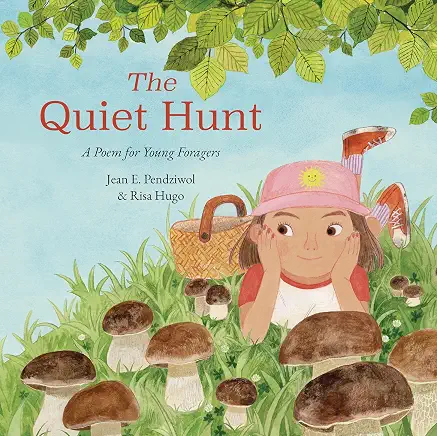
The Quiet Hunt, written by Jean E. Pendziwol and illustrated by Risa Hugo is an absolutely lovely picture book that reminds us where food comes from. Before supermarkets and shops, our ancestors would hunt. They gathered berries and fruits and knew just what was safe to eat and what was not.

Through sharing knowledge, we still can hunt and gather today as we go into the woods and search the streams. A great poetic story to share before going on a nature walk.

ISBN 978-1-77306-767-4, Groundwood Books

Ribbon Rescue is a brand new picture book by Robert Munsch, illustrated by Shaikara David. Jillian is a Mohawk girl and has a beautiful new ribbon dress, made by her grandmother. But when Jillian leaves home, people rush by en route to a wedding, looking for help . She helps them all and her ribbons come to the rescue: as a shoe lace, as hair ribbons, even to tie up a gift. But when Gillian finally makes it to the church, her dress is a mess. How will she solve her problem? The story wraps up, in typical Musch style, with a satisfying ending.

ISBN 978-1-0397-1384-0, Scholastic Canada

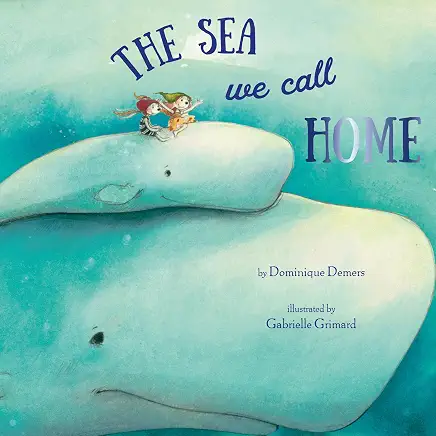
The Sea We Call Home, written by Dominique Demers and illustrated by Gabrielle Grimard, is a whimsical tale of two sweet characters named Little Gnouf and Mirabelle. They have learned about sea creatures from The Big Book of the Sea. Enchanted, they set off in search of the sea. They are amazed by the seaside and soon discover a baby sperm whale, stranded on the beach. With the help of sand crabs and seagulls they set it free and reunite it with its mother. This picture book has a fairytale feel while also giving nonfiction facts about whales. It is beautifully designed with large print.

ISBN 978-1-77278-367-4, Pajama Press

Fake Gnus by Leslie Helakoski is a fun, humorous romp through real and fake facts. Scoop Jackson is a reporter and has to figure out if the information he hears is real or fake. He soon discovers that the pen for the gnus at the zoo is empty. Where are the gnus? Using facts, Scoop is able to separate facts from fiction to determine if the rumours or true or not. Are the gnus climbing the Empire State Building? No! Gnus can run, reaching speeds of up to fifty miles an hour but they cannot climb.  At the end of the hilarious story, readers find statements and need to determine if these are real or fake. Another page helps young readers to question, to look for information and not take anything for granted. A great introduction for young students to doing research and using your brain to distinguish between real information, AI and fake news.

ISBN 978-1-77946-050-9, Groundwood Books

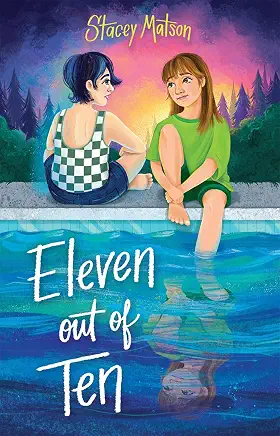
Eleven Out of Ten by Stacey Matson is a wonderful novel for elementary readers to sink their teeth in. Albie and Lake are not just cousins and neighbors, they are also best friends. But when Lake suffers a terrible accident, the two are separate for this first time. 

Albie’s parents are so concerned about Lake and her family that they don’t realize the toll this takes on Albie. Albie struggles with the fact that she is having fun and making new friends while her best friend is in a coma. No matter how often she tells her parents that she wants to see her, she is told that no one is allowed in the ICU and that she can’t go to the hospital. Instead, she has to go to day camp and can’t share any of her experiences with her friend. 

The story is well written and realistic with a satisfying ending. A great novel for young readers to sink their teeth into!

ISBN 978-1-0397-0879-2, Scholastic

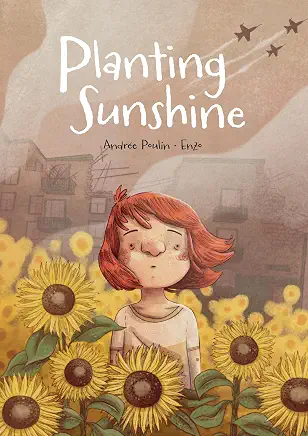
Planting Sunshine by Andrée Poulin, illustrated by Enzo, is an unusual, short novel. Written as free verse poetry, with each page being a poem, this is the story of a child puzzled by war. War enters his home on TV. Theo wonders why there is war, why people kill each other, and his parent has no answers. 

His neighbor has lived through a war. She makes the best perogies and suggests that Theo plants sunflowers. But at school Theo’s friends argue and want to play war. War gives Theo nightmares until his dad realizes that Theo needs to talk about his fears. A girl paints white doves in a quiet protest to war. Once Theo can talk about it and finds small ways to protest as well, he feels much better. He knows that he can’t change the world, but doing what you can to prevent war does help.

This is a wonderful book to help students discuss war, to talk about their own fears, to look for answers together and even to find small ways to protest war anywhere.

ISBN 978-1-77946-138-4, Groundwood Books

Margriet Ruurs writes books for children in Canada and visits International Schools around the world. Her next book is called More Than Books, Why The World Needs Libraries (Orca Books).

www.margrietruurs.com

The Flower Outside The Bouquet

The blues: oil on canvas by Shwetangna Chakrabarty

In today’s world full of conflict and war, it seems an estimated of 13 million children to be out of school in conflict-affected areas, this is as per UNESCO’s Institute for Statistics and the Global Education Monitoring Report. Additionally, conflict, the climate emergency, and the hunger crisis have pushed education systems to the brink. Combined, this means that 224 million school-aged children now have their education severely disrupted by crises. When these young learners, or displaced children, or refugees, or migrants are accommodated back in the a classroom, they are usually labeled for the convenience of the school, state or educational systems. Like the flower in my painting, the same but not the same. I completed the painting sometime back thinking of the flower that is forgotten or is not part of the bouquet and hence named it ‘The Blues’.

We all experience this blue feeling sometime or the other, but what happens if it becomes a constant state of mind because of the education systems or policies. Education often speaks the language of global mindedness. We celebrate mobility, intercultural understanding, multilingualism and learning across borders. We encourage young people to see themselves as part of a shared humanity. And yet, there is a painful contradiction at the heart of this aspiration. How do we include children who have had to cross borders not as a choice?

For some learners, crossing borders is presented as an educational opportunity: a semester abroad, a university pathway, an international qualification, a passport to global citizenship. For others, crossing borders is an act of survival. It may mean fleeing conflict, war, violence, persecution, climate disruption or political instability. For these learners, education is not simply interrupted. It usually becomes inaccessible altogether.

I read a recent UNESCO reporting that reminded me of the scale of this inequity. Refugee participation in higher education has increased, but remains profoundly below global participation rates. Behind this gap are not only questions of affordability or language proficiency, but also missing documents, unrecognised qualifications, disrupted schooling, restrictive admissions systems, limited information, systemic bureaucracy, and institutional processes that were never designed for displaced learners.

This should give all of us in international education pause. Think about the systems we create, is access being masked as equity? Realizing the harsh reality of our diverse classrooms where there are more and more displaced or refugee or migrant children.

Equity cannot be reduced to opening a door and hoping someone can walk through it. Equity asks whether the building itself was designed with everyone in mind. The solution is in the design.

Access is only the beginning

When we discuss inclusion, we often begin with access: who is admitted, who receives a scholarship, who is offered a seat in a classroom. These questions matter deeply. But access alone does not guarantee belonging, participation or success.

A learner who has escaped conflict or war or has been displaced from their country of origin may enter an institution to be included in education and still feel invisible. Their previous learning may be treated with suspicion because it does not fit familiar records or systems. Their linguistic abilities may be viewed as a deficit rather than an intellectual resource. Their experiences may be invited into the classroom only when the topic is war, displacement or trauma.

This is not representation. It is conditional acceptance. Ironically the word conditional acceptance is also a norm in higher education.

True representation means that refugee and displaced learners are not positioned merely as recipients of support, stories of resilience, or subjects for others to study. They must be recognized as thinkers, contributors, knowledge holders and co-creators of learning spaces. Most importantly they are here as we left them nowhere to be.

International education has an important responsibility here. If our purpose is truly to develop learners who can engage thoughtfully with complexity, then we cannot build programmes that treat some forms of knowledge as universal and others as peripheral, traditional or indigenous, minimizing their significance. Categories should exist to treat them at par not as lesser than.

Representation in pedagogy, who is expected to speak, learn and belong?

Pedagogy is rarely neutral. Every classroom makes assumptions about participation, confidence, language, prior knowledge and what counts as success.

In many multicultural classrooms, we reward the learner who speaks quickly, debates confidently, makes eye contact, asks questions publicly and articulates ideas in the dominant language of instruction, mostly English. These may be valuable skills, but they are not the only indicators of intellectual engagement. How does the pedagogy ensure intellectual indicators that are diverse and not common.

A learner who has experienced displacement may need time before contributing in a large group. They may express understanding through writing, visual representation, collaboration, observation, careful reflection or even silence. They may carry linguistic and cultural knowledge that expands the discussion but does not emerge through conventional participation structures. How do we create learning spaces for psychological safety of these learners?

An equitable pedagogy creates multiple pathways for learning and expression. This can only happen if we build systems that recognize and acknowledge the world around them and the changing nomenclature of our classrooms.

This might mean offering varied ways to demonstrate understanding, building in structured reflection before discussion, valuing multilingual thinking, using collaborative rather than exclusively competitive learning structures, and ensuring that classroom dialogue does not demand personal disclosure as the price of participation. It also means being careful not to make refugee or displaced learners representatives of an entire country, conflict or community. No student should have to relive their displacement in order to make a lesson feel authentic for others. They should not be used as case studies.

The question for educators is not, “How can we include displaced or conflict impacted student stories in our curriculum?” It is, “How can our learning environments recognize the full humanity, expertise and agency of displaced or conflict impacted learners?” I avoid using the term ‘refugee’ as I feel it misinterprets the lived experiences of the learner.

Representation in epistemology, whose knowledge counts?

International education must also confront a deeper question: whose knowledge counts?

When knowledge is presented as if it has only one centre, learners from the margins are expected to enter someone else’s intellectual world rather than seeing themselves as participants in creating it. A more equitable curriculum does not simply add diverse names to a reading list. It asks broader questions: Whose voices are missing from this unit?Which histories have been treated as central, and which have been treated as supplementary? What knowledge has been carried through memory, language, community practice or lived experience but excluded because it does not fit conventional pedagogy?

For conflict impacted or displaced learners, this matters profoundly. Displacement does not erase knowledge. A student may arrive without reports or transcripts but still bring deep knowledge of languages, local economies, cultural systems, environmental realities, migration, political histories and resilience. If our education system cannot recognize such knowledge, it is not just failing individual learners. It is limiting itself.

Representation in implementation, where do values become real?

Equity is often strongest in vision statements and weakest in implementation. We may speak beautifully about inclusion while maintaining admissions procedures that assume every learner has uninterrupted schooling, official transcripts, stable internet access, financial guarantees, standardized test scores and familiarity with complex bureaucratic systems.

This is where international education policies must move from aspiration to action. Where do we see the values in action?

Institutions can begin by reviewing whether their admissions, assessment and support systems and policies unintentionally exclude displaced learners. Flexible recognition of prior learning, competency-based assessments, provisional admissions, alternative evidence of qualifications and clearer guidance can make a difference. But the work does not end there.

Students also need practical support and they need staff who understand that trauma-informed practice is not about lowering expectations. It is about creating conditions in which high expectations are possible. These learners need to see themselves in the curriculum, in institutional leadership, in student voice structures and in the decisions made about their learning.

Most importantly, they need to be asked what would make education more accessible and meaningful for them. Not consulted after decisions have already been made. Not invited to share a story for a brochure. Not admitted to raise the school diversity profile. Asked as partners in design.

Internationalism as responsibility

This is the urgent moment for international education to reconsider what internationalism really means. It cannot only mean the ability of some learners to travel easily between countries, institutions and opportunities. It must also mean responsibility towards those for whom borders have become barriers. And responsibility of who created these conditions for displacing young learners.

The promise of international education is that every learner will be recognized for who they are within the journey they are already navigating, not for how they fit in their new environment.This is a question of rights, dignity and intellectual justice.

And for all of us working in international education, it is a reminder that representation must be visible not only in the faces in our classrooms, but in the knowledge we teach, the pedagogies we use and the systems we choose to build. Equity has to begin with access, but it only becomes real when learners are able to arrive, belong, contribute and shape education for their present and future, together.

Sharing stories, expertise, and experiences from international educators around the world. In the spirit of amplifying diverse voices. TIE's blog space is not subject to editorial oversight. TIE bloggers have a long history in various aspects of international education and share their thoughts and insights based on personal experiences.